Navigating The First 90-180 Days In A New CISO Role

Late one Friday afternoon a call comes in and you find out you landed your next CISO role. All the interview prep, research, networking and public speaking has paid off! Then it dawns on you that you could be walking into a very difficult situation over the next few months. Even though the interview answered a lot of questions, you won’t know the reality of the situation until you start. How will your expectations differ from reality? What can you do to minimize risk as you come up to speed? How should you navigate these first 90-180 days in your new role?

Prior To Starting

Let’s assume you have some time to wind down your current position and you are also going to take some time off before starting the new role. During this transition period I highly advise you reach out to your peers in the new role and start asking questions to get more detail about the top challenges and risks you need to address. Start with the rest of the C-Suite, but also get time with board members and other senior business leaders to get their perspectives. Focus on building rapport, but also gather information to build on what you learned during the interview process so you can hit the ground running.

You can also use this time to reach out to your CISO peers in your network who are in the same industry, vertical or company type to get their perspective on what they did when they first joined their company. Learn from their experience and try to accelerate your journey once you start. Keep the lines of communication open so if you run into a situation you are unsure of you can ask for advice.

Once You Start

Build Relationships

First and foremost, start building relationships as quickly as possible. Target senior leadership first, such as board members, the C-Suite and other senior leaders. Work your way down by identifying key influencers and decision makers throughout the org. Play the “new person card” and ask questions about anything and everything. Gain an understanding of the “operational tempo” of the business such as when key meetings take place (like board meetings). Understand the historical reasons why certain challenges exist. Understand the political reasons why challenges persist. Understand the OKRs, KPIs and other business objectives carried by your peers. Learn the near and long term strategy for the business. Start building out a picture of what the true situation is and how you want to begin prioritizing.

Understand the historical reasons why certain challenges exist. Understand the political reasons why challenges persist.

Plan For The Worst

Don’t be surprised if you take a new role and are immediately thrown into an incident or other significant situation. You may not have had time to review playbooks or processes, but you can still fall back on your prior experience to guide the team through this event and learn from it. Most importantly, you can use this experience to identify key talent and let them lead, while you observe and take notes. You can also use your observation of the incident to take notes on things that need to be improved such as interaction with non-security groups, when to inform the board, how to communicate with customers or how to improve coordination among your team.

Act With Urgency

Your first few months in the role are extremely vulnerable periods for both you and the company. During this period you won’t have a full picture of the risks to the business and you may not have fully developed your long term plan. Despite these challenges, you still need to act with urgency to gain an understanding of the business and the risk landscape as quickly as possible. Build on the existing program (if any) to document your assumptions, discoveries, controls and risks so you can begin to litigation proof your org. Map the maturity of security controls to an industry framework to help inform your view of the current state of risk at the company. Begin building out templates for communicating your findings, asks, etc. to both the board and your peers. Most importantly, the company will benefit from your fresh perspective so be candid about your findings and initial recommendations.

Evaluate The Security Org

In addition to the recommendations above, one of the first things I like to do is evaluate the org I have inherited. I try to talk to everyone and answer a few questions:

  1. Is the current org structure best positioned to support the rest of the business?
  2. How does the rest of the business perceive the security org?
  3. Where do we have talent gaps in the org?
  4. What improvements do we need to make to culture, diversity, processes, etc. to optimize the existing talent of the org?

Answering these questions may require you to work with your HR business partner to build out new role definitions and career paths for your org. You may also need to start a diversity campaign or a culture improvement campaign within the security org. Most importantly, evaluate the people in your org to see if you have the right people in the right places with the right skillsets.

A Plan Takes Shape

As you glide past the 90 day mark and start establishing your position as a trusted business partner, you should arrive at a point where a clear vision and strategy is starting to take shape. Use the information you have gathered from your peers, your program documentation and your observations to start building a comprehensive plan and strategy. I’ve documented this process in detail here. In addition to building your program plan you can also begin to more accurately communicate the state of your security program to senior leaders and the board. Show how much the existing program addresses business risk and where additional investment is needed. I’ve documented a suggested process here. Somewhere between your 90 and 180 day mark you should have a formalized plan for where you are over invested, under invested or need to make changes to optimize existing investment. This could include restructuring your org, buying a new technology, adjusting contractual terms or purchasing short term cyber insurance. It could even include outsourcing key functions of the security org for the short term, until you can get the rest of your program up to a certain standard. Most importantly, document how you arrived at key decisions and priorities.

Take Care Of Yourself

Lastly, on a personal note, make sure to take care of yourself. Starting a new role is hectic and exciting, but it is also a time where you can quickly overwork yourself. Remember building and leading a successful security program is a marathon not a sprint. The work is never done. Get your program to a comfortable position as quickly as possible by addressing key gaps so you can avoid burning yourself out. Try to establish a routine to allow for physical and mental health and communicate your goals to your business partners so they can support you.

During this time (or the first year) you may also want to minimize external commitments like dinners, conferences and speaking engagements. When you start a new role everyone will want your time and attention, but be cautious and protective of your time. While it is nice to get a free meal, these dinners can often take up a lot of time for little value on your end (you are the product after all). Most companies have an active marketing department that will ask you to engage with customers and the industry. Build a good relationship with your marketing peers to interweave customer commitments with industry events so you are appropriately balancing your time and attending the events that will be most impactful for the company, your network and your career.

Wrapping Up

Landing your next CISO role is exciting and definitely worth celebrating. However, the first 90-180 days are critical to gain an understanding of the business, key stakeholders and how you want to start prioritizing activities. Most importantly, build relationships, act with urgency and document everything so you can minimize the window of exposure as you are coming up to speed in your new role.

How CIOs, CTOs and the rest of the C-Suite Can Better Support CISOs

There are a variety of reporting structures for CISOs, such as reporting to the CTO, CIO, CFO or CEO. No matter who the CISO reports to, the CISO is still an integral part of the C-Suite. Yet despite this, CISOs don’t always receive full support from the rest of their C-Suite peers, which can cause friction and open up the business to risk. In this post I’ll cover how the rest of the C-Suite can better support their CISO peers and how doing so will actually help them achieve their goals as well.

Strategic Planning

First and foremost, the CISO needs to be included in strategic planning sessions about new markets, mergers and acquisitions (M&A), divestitures, new product launches and new customer types. Each of these areas will create new security risks and regulatory requirements that can have lengthy lead times for addressing. The CISO needs to be informed about product roadmaps, new features and new technology initiatives. If the CISO and security group are left out of these strategic discussions the business could be forced to delay a new business opportunity or worse enter the new opportunity without properly managing the risks.

Master The Fundamentals

Second, CTOs and CIOs need their teams to master and execute on the fundamentals. This means things like asset inventory, logging, observability, QA, QC and operations support (event notification and cost analysis). The reality is the rest of the business needs these things and these are not problems the CISO should own, yet if they are not in place they will cripple a security program. For this reason, a lot of CISOs will try to tackle these issues, but they won’t be successful without support from the C-Suite that actually owns these functions. So, one of the best ways the CTO and CIO can support the CISO is to lead the way on the heavy lifting for these fundamentals that way the CISO can draft off of these and focus on making their security program as effective as possible to manage risk.

Accountability

Speaking of mastering the fundamentals, what we are really talking about is accountability. The rest of the C-Suite needs to hold their teams accountable for completing or resolving security issues. This could be things like resolving technical debt, completing training, fixing vulnerabilities or appropriately prioritizing security requests. If accountability isn’t enforced at the C-Suite, then the rest of the business will become siloed and ignore other initiatives across the company. This can cause security issues to pile up and open up the business to risk that will be impossible for the CISO to manage. By holding your teams accountable and partnering with the CISO function you will create a partnership that can accelerate the business instead of creating unnecessary friction.

One easy way to get visibility into what your teams are doing, so you can drive accountability, is with an exceptions process. Exceptions are a common process for a security function and it allows the security team to have escalating levels of approval based on risk. It also allows for reporting and metrics about how many exceptions a team has requested, how many have been approved and how long it takes the team to resolve an exception. This can provide other C-Suite members valuable insights into how their function is performing with respect to their security commitments and it also allows the C-Suite to drive accountability into their functions by acting as the senior executive approver for critical risks in their function.

An exceptions process doesn’t have to be just for security. The entire company can benefit from an exceptions process such as for purchasing, contracts, sales, finance and engineering. Exceptions across the company can give visibility, promote good friction and drive accountability.

Support Good Friction

There are two different types of friction in a company and we have all experienced them. Good friction exists to help slow people down to consider their actions or minimize risk. These are processes like confirming large financial transactions or requiring validation of someone’s identity before using a critical resource. Bad friction wastes people’s time and is adversarial. These are processes that are inefficient, people that exercise unnecessary control over others or people that never follow through on activities. This type of friction needs to be avoided.

The rest of the C-Suite can support the creation of good friction with respect to security and how security engages with their teams. Good friction can actually accelerate the business by front loading activities where they will take less time, instead of trying to resolve issues later in the lifecycle where they are incredibly difficult and expensive to resolve. Some examples of good friction are security checks as part of the CI/CD pipeline, like SAST, automated attack simulation, or automated compliance reviews. When the rest of the C-Suite supports good friction it will actually make everyone’s job easier and less risky.

Help Advocate For Security

Another way the rest of the C-Suite can support the CISO is by helping to advocate the value of the security function beyond being an insurance policy or compliance function. While the security function may be viewed as a cost center, it can actually drive revenue and generate value. By including the CISO in the strategic planning process, CISOs can advocate product features with customers and engage with customers in a more proactive way. CISOs can also work with the go to market and finance teams to create processes for tracking customer engagements by the security team. This can shed light into the direct and indirect ways the security function is driving revenue, which can change the perspective of the security function from simply being a cost center. Having other C-Suite members advocate and support the CISO with customer engagements, building revenue tracking and involving the security team in all phases of the business can help improve the value of security and reduce overall risk.

Cultural Change

The last area the C-Suite can help the CISO with is cultural change. The Chief People Officer or Chief HR officer can work with the CISO to create and adapt comp structures for the security team that reflects the competitiveness of the market. They can also work with the CISO to create career paths, training and job specific performance metrics for the security function. The Chief People Officer and the HR function are also critical partners for the CISO to backstop security policies and enforce these policies across the company. HR can create and enforce consequences for policy violations, such as lack of eligibility for promotion, and they can also help manage the worst offenders with termination. HR can also set incentives to reward good security behavior such as giving spot bonuses, rapid promotions or even tying bonuses to completion of key security goals.

Outside of the culture of the security function, the rest of the C-Suite can set the tone for the culture with respect to how the company should view and engage with security. In particular, the C-Suite can lay the foundation for a security first culture and hold people accountable for implementing this throughout their functions. They can also shift the culture by holding business owners accountable for the things they own. Lastly, if the rest of the C-Suite carries KPIs, OKRs or other annual performance metrics as part of their annual goals this can help cross pollinate and incentivize the entire company to execute on effectively managing risk.

Wrapping Up

Close partnership with the rest of the C-Suite is essential for the CISO to be successful. The rest of the C-Suite can support the CISO and the security function by involving the CISO in strategic planning, driving accountability, mastering the fundamentals, supporting good friction, advocating for security and helping to drive cultural change. By supporting these areas, the rest of the C-Suite will set the tone from the top and work with the CISO to govern the risk of the business in a way that allows it to eliminate bad friction, accelerate growth and remain competitive.

Whats The Difference Between A CSO and CISO?

Like Arnold Schwarzenegger to Danny DeVito in the movie Twins, the Chief Security Officer (CSO) role is the big brother to the Chief Information Security Officer (CISO) role. What is the difference between these two roles and what skills does a CISO need to focus on if they aspire to become a CSO? In this post I’ll explore the role of the Chief Security Officer (CSO) and what additional responsibilities the role covers when compared to the CISO role.

Big Brother

Lately, there has been a lot of focus on the Chief Information Security Officer (CISO) role following the new SEC guidelines, recent ransomware attacks and supply chain security vulnerabilities (XZ). There can be a lot of different titles for the top security executive at a public company, but the two most common titles for a public company are Chief Information Security Officer (CISO) and Chief Security Officer (CSO). The Twins movie is a good analogy to describe the relationship between the CSO and CISO because in the movie Arnold protects Danny DeVito by helping him avoid trouble, while Danny is super scrappy and shows Arnold how the real world works. They complement each other, protect each other and help each other. One is the overall leader and one has a great hustle.

What the Twins analogy highlights is the main difference between a CSO and CISO is scope. A CSO typically has a bigger scope than a CISO. A CISO will have responsibility for all of the information and technology assets of a company, but a CSO will have this responsibility and additional responsibilities for physical security, executive protection, corporate investigations and other non-information technology based security domains. In fact, for public companies that have an established CSO role, it is typical for the CISO role and function to report to the CSO as one overall security function. Let’s dig into some of the additional functions of a CSO.

Like Arnold Schwarzenegger to Danny DeVito in the movie Twins, the Chief Security Officer (CSO) role is the big brother to the Chief Information Security Officer (CISO) role.

Physical Security

One of the biggest responsibilities for a CSO is physical security. Physical security includes site security for offices and the physical security of the personnel working at the facilities were the company operates. This can include things like cameras and video monitoring, badging systems, security and fire alarm systems, safes, locks, lighting, parking and loading docks, contractor access, mail and package security, bollards and traffic control, security guards and gates, fencing, fire suppression and other physical environment aspects. Depending on the nature of your business, this could also involve supply chain security of manufacturing facilities and components, or even critical infrastructure. It can also include tempest and RF control, including design and management of classified spaces.

One interesting aspect of physical security is to work with construction companies or physical security consulting firms to design and assess the security controls of your facilities. Books like Red Cell by Richard Marcinko offer an interesting historical perspective of how the military physically tests the security of their military installations and public companies should similarly consider an annual or periodic review of their physical security for weaknesses and risks.

If your company is involved in manufacturing, another interesting aspect of physical security is supply chain security and logistics. This is ensuring your products are manufactured securely and aren’t tampered with during the manufacturing process. It can also include assessing the security of component manufacturers, assembly plants and even shipping and logistics companies to make sure your products arrive to your customers and are functioning securely.

Lastly, another aspect of the CSO’s physical security responsibilities is interfacing with local and federal law enforcement for trends, threats and dealing with physical disruptions at your places of business like the recent examples of protests at Google offices.

Executive & Travel Protection

Another responsibility of the CSO, which is related to physical security, is executive and travel protection. Executive and travel protection covers how to physically protect your top executives from threats when they are in public, traveling, at their offices or at their homes. This can include arranging trusted transportation, route planning, on site security surveys, sending advanced teams ahead of the execs, kidnap and ransom insurance, medical support and even online reputation management. You may even arrange training for your execs such as mock kidnapping situations or how to deal with other emergency situations (like riots, terrorist attacks, wars or coups).

Executive and travel protection can include interfacing with local embassies, law enforcement or emergency services depending on the threat level of the country your senior execs are visiting. This is in addition to the existing CISO responsibilities of interfacing with law enforcement for security breaches, APTs, ransomware attacks, digital fraud, etc. Exec and travel protection can also include arranging for security companies to beef up the security of their home(s) and arranging to have their home security monitored by a private security company (if this is part of their perquisites).

Lastly, one very important aspect of executive and travel protection is digital device security. This responsibility may get delegated to the CISO, but the CSO still needs to understand and include digital security as comprehensive part of their executive protection strategy. Certain countries are known to be digitally hostile by attempting to siphon information from or compromise the devices of executives at top companies. This can be attempts at industrial espionage, theft of military and defense information, gaining business advantages, disrupting business, leveraging the exec as an attack vector into the broader company, trade advantages or potential blackmail. The CSO should consider these risks based on the destination country and provide appropriate controls to executive devices such as providing burner phones and laptops for specific country use that are sterile and won’t impact the company or personal reputation of the executive if compromised.

Executive and travel protection is important to ensure your top execs are safe and secure when traveling, but also, if your business is controversial or your top execs like to make controversial statements, this function can ensure they are safe and protected no matter what situation they are in.

Corporate Investigations

One final area of responsibility for the CSO is corporate security investigations beyond the normal technology investigations handled by the CISO. Corporate security investigations can include theft, financial crimes, waste, abuse, vandalism, misconduct, bribery and supply chain control (for ITAR or other export / import laws). You may work closely with law enforcement at the state or federal level depending on the nature and scope of the investigation and the CSO function is critical to coordinating the investigation and representing the business appropriately. Corporate investigations can also involve acting as an expert witness or providing testimony in court on behalf of your company.

One important aspect to remember is, CSOs need to have clear processes and policies defined for how and when to involve law enforcement. The decision to involve law enforcement may be based on legal requirements or may be based on other decisions, but involving law enforcement gives up control of the investigation, which could result in property being confiscated as evidence. If the evidence is a critical business asset like IT equipment, the CSO needs to ensure there are redundancies in place so the business is not disrupted or left without that capability while supporting the investigation.

Wrapping Up

The CSO role is an interesting top security executive role and offers a broader scope than the CISO role. CISOs looking to expand their remit should consider establishing credibility in the areas I’ve described above, but should also remember that most professional security certifications like the CISSP cover aspects of physical security as one of the knowledge based domains. If you don’t have a military or law enforcement background, two interesting certifications that can establish physical security credibility for CISOs are ISMA and ASIS. Lastly, CSOs will typically have responsibility for the CISO function (with the CISO reporting to them), but will also have additional remit in areas of physical security, executive protection, travel protection and corporate investigations. In my experience, the CSO role is more interesting because you get involved in all aspects of security for a company allowing you to channel your inner Arnold Schwarzenegger from Twins, while still retaining the option to flex your Danny DeVito (CISO) roots.

When Evaluating A New CISO Role Don’t Forget The SEC 10-K And Other Governance Forms

When evaluating a new CISO role it is common to do research on the company, industry, product line, etc., but an area that is often overlooked are SEC filings like the SEC Form 10-K and board committee charters. SEC filings and committee charters can offer a wealth of information about how a company views and governs key issues like cybersecurity and risk. In this post I’ll cover where to find key information, red flags to watch out for and other useful information that can be discussion topics during the interview process.

Finding The Right Forms

If you are new to reviewing SEC filings and corporate governance documents there are a number of places to find documents about corporate governance and how the company strategically views cybersecurity and risk. These documents will provide insight into who you may need to influence in order to execute a successful security program and it will also give you an implicit understanding of the priority the company assigns to cybersecurity issues. The two best places to find relevant forms are on SEC.gov (Edgar) or on the company’s own investor relations website.

SEC Forms

The most common SEC forms you will want to review when preparing for a new CISO role are the SEC Forms 10-K, 10-Q and 8-K.

  • 10-K: The SEC Form 10-K is a comprehensive annual report filed by public companies. It has a wealth of information such as their financials, how they view the market, executive compensation and more. When considering a new CISO role definitely check out section 1 and 1A. Section 1 covers an overview of the business and section 1A covers macro risk factors (you may be asked to help mitigate these risks). Section 1 may also specifically call out cybersecurity governance and have details on the reporting structure, responsibilities, experience and methods for governing cybersecurity at the company. Also check out section 7, which will detail how management describes the company and can also have details on recent acquisitions or restructuring activities, which could continue to present a risk to the business.
  • 10-Q: The SEC Form 10-Q is a comprehensive quarterly report filed by the public company. This will detail their quarterly results and will also provide any updates or changes to the sections I listed above – mainly section 1, 1A and section 7. Most of the time there won’t be any updates to these sections and they will refer back to the 10K, but it is still good to review the latest 10-Q available.
  • 8-K: The SEC Form 8-K is a form companies must file to notify investors of major events. The biggest thing CISO candidates will want to review is if the company has had any material cybersecurity or operational incidents. However, if the company deems an event isn’t material it may not be in the 8-K and so it is a good idea to do a web search of the company as well.
  • Committee Charter Docs: The last set of documents to review are the committee charter documents. This will tell you how the board is structured, which can give you insights into what to expect if you take the role and give periodic updates to the board. The committee charter documents will also outline how they govern cybersecurity, risk and technology and the committee charter documents can give you implicit insight into how the company views the role of the CSO / CISO and cybersecurity.

How Should Cybersecurity Be Governed?

When reviewing the governance and committee documents of a public company, you may find cybersecurity discussed in different places. You should review these documents and also consider discussing cybersecurity governance during the interview process.

Audit committee

The audit committee is the most common committee to govern cybersecurity and risk at a public company. The challenge with placing cybersecurity and risk in the audit committee is the primary function of that committee is financial accuracy and integrity. Cybersecurity and risk are typically listed as “other functions”, which runs the risk of it not having the same priority as financial activities and the committee members may not have the right expertise to govern these functions. The typical executive experience of an audit committee member can be CEO, CFO or COO and these individuals typically aren’t experts in cybersecurity or risk. It isn’t the end of the world, but as a CISO candidate you should review the backgrounds of the audit committee board members and ask how they interact with existing C-Level executives when discussing cybersecurity, technology and risk. You may even want to ask to interview with one of the committee members before taking the job. The main goal is to make sure you are going to get the consideration, prioritization and support you need.

Tech and cyber committee

Aside from the audit committee, the other committee that governs cybersecurity and risk is the technology and cyber committee. However, the existence of this committee is currently non-standard at public companies even though it is considered best practice for corporate governance. If the company you are interviewing has a technology and cybersecurity committee consider yourself fortunate, but you should still do your own due diligence by researching the existing committee members and their backgrounds. Consider requesting an interview with one of these committee members (if it isn’t part of the interview process) to get their perspective on cybersecurity governance and issues at the company.

The challenge with placing cybersecurity and risk in the audit committee is the primary function of that committee is financial accuracy and integrity.

Other Cybersecurity Governance Aspects To Consider

There are a few other aspects to consider when reviewing corporate governance documents. These other areas can give you valuable insight into what is expected of you if and when you assume the role of CISO at the company. First, I recommend covering materiality during the interview process. Ask if the company has a process and if possible discuss their criteria for determining materiality of a security incident. Second, review and assess how often the board committee responsible for cybersecurity meets. This can give you an idea of how often you will be expected to present to the board and may even give you an idea of the topics that are discussed.

Red Flags

The whole point of reviewing these documents is to help you make an informed decision about what you are walking into if you take the role. There are few red flags you should look out for in these documents that should definitely be discussed during the interview to make sure you are clear on your role and expectations. These red flags may also help you when negotiating for things like severance, inclusion in the D&O liability policy or other concessions.

10-K & 10-Q

Remember, the 10-K and 10-Q will have a section on risks and the company may specifically call out cybersecurity risk as a macro issue they are concerned about. However, one red flag I would bring up for discussion is does the company address how they plan to manage these risks? Something as simple as “we plan to discuss and manage these risks inline with business priorities and expectations to minimize their impact” indicates they have at least given it some thought. Even better, if the company has a detailed section on risk and risk management that addresses how they plan to govern the company to address these risks. If the 10-K and 10-Q just list the risks, it may be an indication the company is paying lip service to cybersecurity or it could mean they are waiting for the right candidate to come in and develop a plan.

Experience Of Committee Board Members

Another potential red flag is the background and experience of the board members for the committee that governs cybersecurity and technology risk. Review their background, how long they have been serving on the board and when they are up for re-election. If the committee members have a strong technology or cybersecurity background you can expect to find an ally in the board room. If the committee members haven’t been technology executives you may find you have to change your message or do some education when reporting to the board. The SEC has indicated cybersecurity experience is necessary for the board to effectively govern risks, so if there isn’t clear experience, it is something to bring up in the interview for how and when the company is planning to address the experience gap.

Cybersecurity As Part Of The Audit Committee

I previously mentioned most public companies have cybersecurity listed as an additional function of the audit committee. This can be a red flag if the board doesn’t have committee members with technology experience, but can also be a red flag if the company views the CISO role and security program as more of a compliance function. The view of the board will be directly related to how much funding and support you are able to get from the rest of the company like the CEO and CFO.

Having cybersecurity and risk as part of the audit committee can also lead to a disconnect from the main security program. For example, if the audit committee treats security more as a compliance function, they may request a group that reports directly to them that audits the effectiveness of the corporate security program. This can lead to duplication of effort, cross purposes and mixed messaging at the board level. It can also undermine the authority of the CISO if the board is independently dictating security actions to the company outside of the main security program. However, having cybersecurity as part of the audit committee isn’t the end of the world and can actually lead to support from the board, but it will require additional effort and relationship management to make sure the board is supporting your program effectively. These are all topics you will want to explore during your interview.

Other SEC Filings

There are a few other areas you should review when conducting research for a new CISO position. I highly recommend reviewing recent 8-K filings and conducting internet searches to see if the company has reported any recent security incidents or breaches. If they have, you may be walking into a situation where they need immediate help to get back to a good state, but that support may wane after the urgency of the situation dies down. If you are considering taking a role that is walking into a post incident situation, be really clear on expectations and success criteria and try to build those into your employment contract.

The other area I recommend reviewing is recent or ongoing M&A activity. This will be listed in the 10-K or 10-Q filings for the company and it can give you some insight into what you may be walking into as a CSO / CISO. M&A activity is notorious for “closing the deal” and then sorting everything out later. As a CISO this means you could be inheriting a heterogenous security program or you may have to spend a significant amount of time up-leveling the acquisition to meet the standards of the rest of the company. There may even be extensive integration, standardization, etc. that needs to be completed. All of these are risks that you should be aware of when walking into a new CISO role.

Wrapping Up

When evaluating a new CISO role for a public company I recommend thoroughly researching the company as part of your evaluation process for the role. Familiarize yourself with their business model, the latest news articles, key members of the executive staff, board members and financial statements. If you have a strong CISO network I recommend reaching out to them and getting their perspective on the position. However, overlooked areas of research are the public company filings with the SEC and other investor relations documents that can give you more perspective on the company. It is particularly important to review these documents to get an idea of how the company governs cybersecurity and risk. These documents will also highlight potential red flags and discussion topics to explore during your interview. Thoroughly researching the company and the role will not only help prepare you for the interview process, but can also give you insight into how other public companies govern these issues so you can compare with your current position and make the best decision possible for your career.

Resources

SEC Search

DDN Discussion Of Cybersecurity Governance

Security Considerations For M&A and Divestitures

I’ve been speaking to security startups over the last few weeks and some of the discussions made me think about the non-technical aspects of security that CISOs need to worry about. Specifically, things like mergers, acquisitions and divestitures and the different risks you will run into when executing these activities. There are a number of security issues that can materialize when combining businesses or separating businesses and in this post I’ll share some of the things you need to think about from a security perspective that may not be obvious at first glance.

What’s Going On Here?

There are a number of reasons for mergers & acquisitions (M&A) or divestitures. For the past two decades, the tech industry has used M&A to acquire smaller startup companies as a way to collect intellectual property, acquire specific talent or gain a competitive advantage. Divestitures may be the result of changing business priorities, separating business functions for regulatory reasons, eliminating redundancies or a way to sell a part of the business to cover costs. Mergers, acquisitions and divestitures are similar because you will want to review the same things from a security perspective, but it is probably easiest to think of divestitures as the reverse of an M&A – you are separating a business instead of combining a business. Divestitures are definitely less common than M&A in the tech space, but they aren’t unheard of. There are also differences in terms of the security risks you need to think about depending on if you are acquiring a business or separating a business. My best advice is to work with the legal and finance teams performing the due diligence and have a set process (that you have contributed to) so you don’t forget anything. With that, let’s dive into a few different areas.

Physical Security

Physical security is something you will need to think about for both M&A and divestitures. For M&A you will want to perform a physical security assessment on the facilities you are acquiring to make sure they meet or exceed your standards. Reviewing physical security controls like badging systems, fencing, bollards, cameras, fire suppression, emergency lighting, tempest controls (if required), safes and door locks will all help make sure your new facilities are up to standard. If you aren’t sure how to perform this, hire a company that specializes in physical security assessments or physical red teaming.

While physical security for M&A may seems straight forward, there are a few gotchas when performing divestitures. The biggest gotcha is understanding and reviewing the existing access of the people that are part of the divestiture because you will now need to consider them outsiders. All of your standard off-boarding processes will apply here such as terminating accesses to make sure someone doesn’t retain access to a system they are no longer authorized to access (like HR, Finance, etc.).

Things can get complicated if parts of the business are divesting, but not fully. Some examples of this are when the business divests a smaller part, but allows the smaller part to co-locate in their existing facilities. This may complicate physical security requirements such as how to schedule or access common areas, how to schedule conference rooms, how to separate wifi and network access, etc. In the above example, the larger company may act like a service provider to the divested part of the business, but there still needs to be effective security controls in place between the two parts.

Personnel Security

I touched on this a bit already, but personnel security is something to consider when performing M&A or divestitures. With M&A the biggest issue will be how to smash the two IAM systems and HR systems together without punching huge holes in your network. Typically what happens is the two parts operate separately for a while and then consolidate to a single system and the employees of the acquired business get new accounts and access.

For divestitures, particularly if they don’t result in a clean split, you will need to focus heavily on access control and insider threats. Think about how you will separate access to things like source code, financial systems, HR systems, etc. If the smaller company has physical access to your space then you need to build in proper physical and logical controls to limit what each business can do, particularly for confidentiality and competitive reasons.

What’s an example of where this can go wrong? Let’s say business A is going to divest a small part of its business (business B). The complete divestiture is going to take a while to finalize so company A agrees to allow company B to continue to access their existing office space, including conference rooms. However, the legal team didn’t realize the conference rooms are tied to company A’s SSO and calendaring system so company B has no way to schedule the conference rooms without retaining access to company A’s IAM system creating a major security risk. Whoops!

The biggest gotcha is understanding and reviewing the existing access of the people that are part of the divestiture because you will now need to consider them outsiders.

Contracts

Contracts may not seem like a typical security issue, but they should be part of your review, particularly when performing M&A. Why? You are acquiring a business that is worth something and that business will have existing contracts with customers. The contractual terms with those customers may not match the contractual terms of the acquiring company, which can cause a risk if there is a significant difference in contract terms. Smaller companies are more agile, but they also usually have less negotiating power compared to large companies and as a result are more likely to agree to non-standard contract terms. What are some terms you need to think about?

  • Vulnerability Remediation Times – How quickly did the new company promise to fix vulnerabilities for their customers?
  • Incident & Breach Disclosure Time Frames – How quickly did the new company promise to notify customers of a breach or incident? I have seen very small time frames suggested in contracts, which are impossible to meet, so I definitely recommend reviewing these.
  • Disclosure of Security Postures – Does the new company have contractual terms promising to provide SBOMs or other security posture assessments to their customers on a regular basis?
  • Compliance Requirements – Has the new company agreed to be contractually obligated to maintain compliance certifications such as PCI-DSS, SOC 2, ISO27001, etc.
  • Penetration Testing & Audits – Has the new company contractually agreed to have their products or services penetration tested or have their security program audited? Have they agreed to provide these reports to their customers on a regular basis?
  • Privacy & Data Governance Terms – Is the new company required to comply with privacy regulations such as allowing customers have their data deleted, or mandating certain data governance requirements like DLP, encryption, data deletion, etc?
  • BCP/DR and SLAs – Are there contractual uptime SLAs or response times and does the existing BCP/DR plan support these SLAs?

My advice is to set a timeline post acquisition to review and standardize all of your contracts to a single set of standard clauses covering the above topics. This is usually part of a security addendum that the legal team can help you create. The biggest challenge with contracts will be to “re-paper” all of your customers to hopefully get them on the same standardized contract terms so your security program doesn’t have a bunch of different requirements they have to try to meet.

Accuracy Of M&A’s

One of the biggest risk of performing M&A’s is trying to get an accurate picture of the existing security posture of the company being acquired. Why is this so difficult? The company being acquired is trying to look as good as possible so they get top dollar. They can’t hide things, but they aren’t going to tell you where all the skeletons are buried either. The acquiring company usually doesn’t get a full picture of the existing security posture until after the deal is done and you start trying to integrate the two parts of the business. If you have a chance to interview the existing security team before the M&A closes definitely ask to see their latest audit reports, compliance certifications, penetration testing reports, etc. Consider working with legal to set conditions for how old these reports can be (e.g. no older than 6 months) to hopefully give you a more accurate picture or require the acquired company to update them before the deal closes. Interview key members of the staff to ask how processes work, what are their biggest pain points, etc. Consider hiring an outside company to perform an assessment, or you can even consider talking to one of their largest customers to get their external view point (if possible).

Wrapping Up

M&A and divestitures can be exiting and stressful at the same time. It is important for the security team to be integrated into both processes and to have documented steps to make sure risks are being assessed and addressed. I’ve listed a few key focus areas above, but most importantly standardizing your M&A security review can help avoid “buyers remorse” or creating unnecessary risk to the acquiring business. Finally, having a documented divestiture process and reviewing the divestiture with legal can help avoid security risks after the fact.

Should There Be A Professional CISO Certification and Organization?

I’ve been thinking a lot about the CISO role and how it is rapidly maturing from a technology and compliance role to a more generalized business executive role that specializes in security and risk. The primary catalyst for this evolution is the recent release of the SEC rules requiring companies to report material incidents on their 8K forms. It also requires companies to disclose their process for governing security issues (via committees or other processes) and their process for determining materiality (via their annual 10k filing). All of this is having a similar effect on the CISO role that Sarbanes-Oxley had on the CEO and CFO role after it was passed in 2002. The end result is public companies are now being expected to demonstrate investment and expertise in governing security issues, which is elevating the CISO role to become a true executive officer and is ushering the role into the board room.

Why Did The SEC Establish The New Requirements?

Security reporting and disclosures by public companies has been lacking. There has been zero incentive or accountability for companies to report these events other than via lawsuits, stock price corrections or brand and reputation impact These disclosures often happen as a result of a news report published months or years after the actual incident. The company then issues a generic statement downplaying the event and emphasizing how serious they take security. The SEC has determined this pattern of behavior is insufficient for investors to accurately make decisions about the health of the company.

Why Do Professional Certifications Exist?

Professional certifications exist for a number of reasons. Doctors, accountants. professional engineers and lawyers all must demonstrate a minimum level of knowledge to get licensed in their chosen profession. They must also agree to conduct themselves according to a specific code of conduct. This allows the practitioners to wield specific credentials demonstrating proficiency and credibility in that field. Displaying professional credentials attests these professionals bear the responsibility to protect life, prevent fraud or protect assets.

Additionally, professional credentials afford the practitioners a number of benefits such as knowledge sharing, continual career development, job placement and act as a back stop if someone’s conduct is called into question. Certifying organizations can testify on someone’s behalf if they believe they have upheld the requirements of the profession, or they can self regulate and strip someone of their credentials for fraud or gross negligence.

A short list of fields with professional certifications are as follows:

  • Lawyers – Bar
  • Doctors – Medical license, National Board of Medical Examiners (NBME), State level licenses, American Board of Medical Specialities (ABMS)
  • Accountants – Financial Accounting Standards Board (FASB), Government Accounting Standards Board (GASB), Generally Accepted Accounting Principles (GAAP), Certified Public Accountant (CPA)
  • Engineers – Certified Professional Engineer (CPE)
  • Privacy Professionals – International Association of Privacy Professionals (IAPP)

Existing Security Certifications And Organization Are Lacking

There are already a number of certifications security professionals can choose from on their path to becoming a CISO. A short list of common certifications listed on CISO job postings or LinkedIn profiles is as follows:

  • C|CISO
  • CISSP
  • CISM
  • CISA
  • CRISC

Of these certifications, only the C|CISO certification comes close to offering a specific certification for CISOs. The rest serve either as generalized security certifications or specific offshoots of the security profession. These certifications are often bundled together by professionals to demonstrate breadth of knowledge in the security field.

While existing certifications are good, they are all lacking in what is needed for someone to serve as a CISO at a publicly traded company. They are more generalized about how to serve as a CISO at any company (small to large), but publicly traded companies have specific requirements and demands. Specifically, most of the certifications above are extremely heavy on a breadth of technical aspects and popular industry frameworks. Some of them do cover how to create and manage a security program. Some even cover basic board level conversations (although these are usually technical discussions, which are unrealistic). Where I find these certifications lacking is as follows:

  • Realistic board level conversations about risk and tradeoffs including building effective presentations
  • Board and legal conversations about materiality for security incidents
  • Common board committees and what to expect as a CISO serving on a board level committee for your company
  • Testifying or providing legal evidence post incident
  • Legal conversations about how to best notify customers of breaches including drafting communications
  • Legal conversations with security researchers and navigating vulnerability disclosures
  • How to establish and manage a bug bounty program
  • Navigating conversations with law enforcement or national security issues
  • How to effectively change or strengthen security culture
  • How to have conversations with other C-Suite executives about security
  • Navigating customer and industry requests for disclosure of security program information
  • Managing the budget / P&L for a security function including tooling, licenses, services, travel, expenses, equipment, certifications, etc.
  • Common security team structures and how to design a security org that add maximum value for the business
  • Personnel management, skillsets expected for different roles, matching training and certifications to job function, etc.
  • Negotiating with vendors and cyber insurance companies
  • Contract review and negotiation with customers (including common security and privacy clauses)
  • Creating RFPs, RFIs and RFQs
  • Talking to customers about security at your company or hot button security issues
  • Establishing requirements, conducting trade-off analyses and performing build vs buy analysis
  • How to effectively network with peers
  • Industry resources such as ISACs, Infraguard, etc.
  • Top recruiting agencies for placing CISOs at publicly traded companies
  • Career development post operational CISO (boards, consulting, etc.)
  • Properly documenting your security program
  • How to navigate achieving common compliance certifications such as SOC1, SOC2, FedRAMP, ISO27001, HIPAA, PCI-DSS. Typical costs, consulting companies that can help with these processes and what to expect during the process.
  • When to outsource your security program to an MSP
  • When to bring in an outside consulting or incident response firm
  • Successfully passing an external audit
  • Negotiating for a job including severance, D&O liability, assessing the role, etc.
  • Differences in the CISO role depending on who it reports to (General Counsel, CTO, CIO, CEO, CFO)
  • How to navigate common security related political and moral hazards at public companies

As you can see, there is a big difference between what certifications offer and the real demands of a public company CISO. Additionally, there are a number of professional security organizations such as the Information Systems Security Certification Consortium (ISC2), Information Systems Audit and Control Association (ISACA) and The Council of E-Commerce Consultants (EC-Council). Each has their own certification track, terminology and code of conduct. Each is good in their own right, but there is still a lack of a single certifying body for public company CISOs similar to a CPA. Arguably, ISACA comes closest to being an international organization that can back CISOs, but they lack a CISO specific certification covering the majority of the topics above.

While existing certifications are good, they are all lacking in what is needed to prepare someone to serve as a CISO at a publicly traded company.

Why There Should Be A Professional CISO Certification

The SEC requirements are forcing public companies to govern security to the same standard forced by Sarbanes-Oxley 20 years ago. The SEC considers security to be a material concern to investors and public companies need to treat the issue accordingly. As a result CISOs are getting elevated to the board room and CISOs need to be prepared to navigate the issues they will encounter while serving at a public company.

The advantages of a professional CISO certification and accompanying organization are as follows:

  • Standard of ethics and conduct – CISOs face a difficult job and often walk into roles that aren’t properly supported or properly funded. Yet, CISOs are asked to bear the responsibility and accountability for the security health of the organization. A standard of ethics and conduct, similar to a CPA, will backstop the authority of the CISO and serve as guidelines for how to navigate common issues at publicly traded companies.
  • Standard credential for publicly traded companies – Large companies face a difficult job sorting through the credentials and titles of job applicants. Most public companies hire executive recruiting firms to help navigate the sea of candidates to find ones that are truly qualified for the role. However, a single professional CISO certification would distinguish individuals who have met the standard to be a CISO at a publicly traded company and distinguish these credential holders from other individuals with discretionary CISO titles.
  • Shelter the role from (some) liability – One advantage of a professional certification like the ones for doctors, engineers, lawyers and public accountants is it provides a standard of conduct. These professionals can fall back on this standard of conduct if their professionalism is called into question and they can even have the certifying organization offer testimony on their behalf. As CISO take on more liability, a professional CISO organization can be useful to help support CISOs, testify on their behalf, offer recommendations for liability insurance policies or even provide low cost liability insurance through the organization. They can even help review employment contract terms to evaluate liability policies, severance, legal coverage, etc.
  • Board Level Expertise – One of the primary roles of public company CISOs is to present to the board and help the company navigate regulatory and compliance requirements such as SEC filings, breach notifications, etc. A professional CISO certification offer individuals this experience and it can give them the confidence to speak to the board on how to navigate topics of risk. By certifying individuals are qualified to operate in the board room the board will gain another voice to balance the other C-Suite executives who aren’t grounded in technology and security issues.
  • Consulting and auditing – One final advantage of a professional CISO certification is for the “big 4” consulting firms or other agencies who are contracted by investment companies to audit and certify the filings and reports of public companies. In this case, a certified CISO can represent shareholders and investors for the accuracy of security filings around governance processes, representation in board committees, recommendations for appropriate investment in security governance and generally offering advice on industry best practices for security governance at publicly traded companies.

Wrapping Up

I’m bullish on the CISO role long term because I think it is the ultimate C-Suite executive. Public company CISOs touch all aspects of the business, they need to have strong technical chops, need to understand business topics and need to have the political chops to build alliances and navigate big company politics. Existing security certifications are good, but none of them offer a comprehensive breadth of topics to prepare individuals to become a CISO at a publicly traded company. As CISOs establish their role and credibility in the board room, it will become critical for these individuals to have credentials that back their experience, offer support and can elevate the CISO role on par with other C-Level execs, similar to what Sarbanes-Oxley did for CFOs after 2002.

Are We Peak CISO?

Let’s be honest…the CISO role is weird right now. It is going through a transformative phase and the industry is at an inflection point similar to what other C-Level roles (like the CFO) have gone through in the past. What makes the role weird? The CISO community and any company that has a CISO is facing unprecedented regulatory pressure, the economy and interest rates have people on edge, layoffs in the tech sector have shaken employee confidence (to the applause of investors) and technology innovation via AI is causing additional disruption and risk across all sectors.

In additional to these external pressures the past few years have seen the proliferation of CISO title sprawl and confusion from companies about how to best employ and utilize a CISO (hint, we aren’t your scapegoats). Despite all of this turmoil, change is also a time for opportunity and there are a few things I think will help clarify and mature the CISO role.

CISO Title Sprawl

I’ve been tracking job titles and job postings on LinkedIn for the past year or so and I’ve noticed a phenomenon I’ll call title sprawl. A quick search for titles shows there are vCISOs, Advisory CISOs, Fractional CISOs, CISOs In Residence and Field CISOs. On top of this, add in Chief Security Officers, Chief Trust Officers and Heads of Security. Do we need all of these titles? Maybe, but I think this title sprawl is more indicative of three things 1) People with CISO titles are in high demand and people want to retain the title once they get it and 2) Companies are still uncertain about how to title and employ someone to lead their security function. 3) Title sprawl is a result of the political power struggle occurring between the CISO role and other C-Level roles (more on that below).

From the titles above there are really only four functions for a current or former CISO – board member (in some capacity), executive management (officer of the company), consultant and sales. There is similar title sprawl and variance with CTO titles, but not to the extent of the CISO title (yet). Time will tell if other C-Level roles start to follow suit, but for now, let’s break down the functional CISO role buckets.

Board MemberThese are current or former CISOs who sit on a board either as a technical advisor, business advisor or some combination thereof.

Executive Management – Individuals employed by a company to lead the information security program. May also manage other parts of IT such as identity, privacy, data, etc. Titles may be CISO, CSO, CISO in Residence (for Venture Capital), Chief Trust Officer and Head of Security.

Consultant – These are individuals who are providing their expertise as a current or former CISO to other companies to help them establish, transition or manage a security program. Often the companies employing these individuals claim they can’t afford a full time CISO, but they seem to be able to afford other full time C-Suite titles (hmm…)? Titles may include Virtual CISO (vCISO), Fractional CISO, CISO in Residence and Consulting CISO. (CISO in Residence again because they can “consult” to their VC holding companies about the state of their security programs).

Sales – These are people who are experts in the field of security, may hold one or more certifications and may be past CISOs. Their job is to help the company they work for drive sales. Typically the title they use is Field CISO or Advisory CISO.

Standardize The Reporting Structure

Moving on from title sprawl, companies are also confused about where the CISO title should sit. Some companies advertise it as a Director level role reporting into the VP of some function. Other’s title it as a VP level role reporting into a Senior VP or some other executive. Still other companies have the CISO reporting to the CEO, CIO, CTO or General Counsel. It is even possible this person is an individual contributor. Companies are clearly confused about whether the CISO is a technologist, regulatory compliance specialist or true C-Suite executive. While reporting structure may be a direct reflection on company culture, it is also a public example of the battle for equivalency that is playing out between the CISO and other C-Level roles. Often, CISOs are hired by other C-Levels (not the CEO) and until it becomes more common for CISOs to report to the CEO as an accepted peer to other C-Levels, this confusion and variance will persist. That being said, if you are considering a CISO title and the company isn’t willing to add you to the D&O liability policy then you may be better off taking a lower level title to eliminate personal risk.

Bolster Security Management Certifications

Security certifications from popular organizations talk a lot about regulations, risk and different security concepts (technical or not), but few, if any, offer a comprehensive certification on what it truly takes to be a CISO. Any CISO level certification should include potential career paths that lead to the CISO role, career paths post CISO role, difference in the CISO role based on company size, exposure to business topics in addition to security topics, SEC reporting, interfacing with law enforcement and lastly discussion of how to maximize success based on where the role sits – e.g. reporting to the CEO, CTO or CIO and how that may change your lens as a CISO. This begs the question if there should be a true professional level CISO certification similar to a professional engineer, accountant or lawyer, but let’s save that discussion for a future blog post.

Embrace Increased Regulation

Given the recent increase in regulation, particularly from the SEC, bolstering CISO certifications to include more business acumen may soon be table stakes instead of a nice to have. Recent regulations forcing companies to disclose material cybersecurity events in their 8k filings are starting to accelerate the maturity of the CISO role at publicly traded companies. Companies can no longer fail to invest in security or report breaches (unless they want steep penalties). In particular, this is forcing the CISO role into the board room or at least on par with other C-Level roles because they have to help these companies navigate the decision to report material events in their filings. Existing and future CISOs can embrace this increase in regulation to backstop their authority at companies who are struggling to fully embrace the CISO role as a C-Level executive. While it may not elevate the current role with a promotion, it should at least open the door to the board room and provide a seat at the table for discussion.

While CISO reporting structure may be a direct reflection on company culture, it is also a public example of the battle for equivalency that is playing out between the CISO and other C-Level roles.

The last point I’ll make about regulation is – while the SEC watered down the requirements for cybersecurity expertise on boards, I predict this expertise will still be required and in demand as companies start to navigate the new SEC reporting requirements. In particular, companies may be penalized and eventually required to demonstrate cybersecurity board expertise (via experience or certifications) if they are found to have a material security breach and can’t demonstrate appropriate security governance at the board level.

What’s The End Result?

It is clear the security industry and the CISO role are in a state of confusion as a result of the tight job market, uncertain economy, increased regulation and pace of technology innovation. The net effect of title sprawl and the struggle for equivalency is – it confuses customers, investors, partners, recruiters and job candidates. Title sprawl artificially increases competition for jobs and causes a wide variance in how the CISO role is employed. However, I think this state of confusion is a good thing because it is forcing conversations and causing people to stop and think. The CISO role is the newest member of the C-Suite and it is growing up and trading in the hoodie for a collared shirt. We are starting to claim our seat at the board level and are able to hold our own or make other C-Level roles redundant. As the CISO role evolves from a “nice to have” to a “must have” in the C-Suite, we will see this confusion fade away and the CISO role will truly reach its peak.

What’s The Relationship Between Security Governance and Organizational Maturity?

Organizational and security governance is touted as a key component of any successful security program. However, I’ve been thinking about governance lately and how it relates to the overall maturity of an organization. This has prompted some questions such as: what happens if you have too much governance? and What’s the relationship between security governance and organizational maturity?

What Is Governance?

First, let’s talk about what governance is.

Governance is the process by which an organization defines, implements and controls the business.

Let’s unpack what this means for a security organization. The process of defining security for the business is done through policies, standards and guidelines. Security policies are requirements the business must meet based on laws, regulations or best practices adopted by the business. These policies align to business objectives. Implementation is done through security controls that are put in place to meet a specific policy or to manage a risk. Lastly, controlling the business is done via audits and compliance checks. The security org follows up on how well the business is following policies, implementing controls and managing risk. Control can also include enforcement, which can involve gating processes, such as requiring approval for business critical and high risk activities, or recommending additional security requirements for the business to manage a risk.

Why Do We Need Governance At All?

In an ideal world we wouldn’t. Imagine a business that is created entirely of clones of yourself. There would be implicit and explicit trust between you and your other selves to do what is best for the business. Communication would be simple and you would already be aligned. In this case you don’t need a lot (or any) governance because you can trust yourself to do the things. However, unless you are Michael Keaton in Multiplicity, this just isn’t a reality.

Governance achieves a few things for a business. First, it communicates what is required of its employees and aligns those employees to common objectives. Second, it helps employees prioritize activities. None of this would be needed if human’s weren’t so complex with diverse backgrounds, experiences, perspectives, education, etc. In an ideal world we wouldn’t need any governance at all. The reality is, we do need governance, but it needs to be balanced so it doesn’t unnecessarily impede the business.

How Does This Relate To Organizational Maturity?

Organizational maturity refers to how your employees are able to execute their tasks to achieve the objectives of the business. This relates to things like the quality of code, how quickly teams resolve operational issues or how efficiently they perform a series of tasks. It can be loosely thought of as efficiency, but I actually think it combines efficiency with professionalism and integrity. Maturity is knowing what good is and being able to execute efficiently to get there. There is a fantastic book about this topic called Accelerate: The Science of Lean Software and DevOps: Building High Performing Technology Organizations by Nicole Forsgren PhD.

Which brings us to the relationship of governance and maturity…

There is an inverse relationship between organizational maturity and organizational governance. In simple terms:

The less mature an organization, the more governance is needed.

For example, if your organization struggles to apply patches in a timely manner, continually introduces new code vulnerabilities into production or repeatedly demonstrates behavior that places the business at risk, then your organizational maturity is low. When organizational maturity is low, the business needs to put processes and controls in place to align employees and direct behavior to achieve the desired outcomes. In the examples above, increased governance is an attempt to manage risk because your employees are behaving in a way that lacks maturity and is placing the business at risk.

What causes low organizational maturity?

Organizational maturity is a reflection of employee behavior, skillset, knowledge, education and alignment. In other words, organizational maturity is a reflection of your organizational culture. In practical terms your employees may simply not know how to do something. They may not have experience with working for your type of business or in the industry you operate in. Perhaps they had a really bad boss at a past job and learned bad behavior. Whatever the reason, low organizational maturity is linked to lots of sub-optimal outcomes in business.

How To Improve Organizational Maturity?

If governance and maturity are inversely linked, the question becomes how can we increase organizational maturity so we need less governance? There are a lot of ways to increase organizational maturity. One that is fairly obvious is to start with a mature organization and maintain it over time. However, this is easier said than done and is why some organizations are fanatical about culture. This relates to everything from hiring to talent management and requires strong leadership at all levels of the company.

Other ways to improve organizational maturity are through training and education. This is why security awareness and training programs are so critical to a successful security program. Security awareness and training programs are literally attempting to improve organizational maturity through education.

One last way to improve maturity is via process. The security organization can establish a new process that all teams must follow. As teams go through this process you can educate them and reward teams that exhibit the ideal behavior by relaxing the process for them. You can also help teams educate themselves by publishing the requirements and making the process transparent. The challenge with imposing a new process is having the discipline to modify or remove the process when needed, which comes back to governance.

What’s the right level of governance?

The optimal level of governance is going to be based on your organizational maturity and desired business outcomes. In order to determine if you have too much or too little governance you need to measure organizational maturity and the effectiveness of existing organizational governance. There are industry standard processes for measuring organizational maturity, like the Capability Maturity Model Integration (CMMI) and Six Sigma, or you can create your own metrics. Some ways to measure governance effectiveness are:

  • Ask For Feedback On Security Processes – Are the processes effective? Do teams view them as an impediment or are they viewed favorably? Are the processes easy to navigate and objective or are they opaque and subjective?
  • Measure Effectiveness Of Security Controls – Are your security controls effective? If you ask a team to do work to implement a security control you should have clear metrics that determine if that control is effective. If you implement a control, but that control hasn’t changed the outcome, then the control is ineffective. This can indicate your governance is ineffective or your organizational maturity needs to improve.
  • Assess and Update Policy – Security policies should be living documents. They shouldn’t be set in stone. Security policies need to map back to laws and regulations they support and the business requirements needed to be successful. Laws, regulations and business requirements all change over time and so should your security policies. By having up to date and relevant security policies you can ensure your organizational governance matches the maturity of the business.

What Are Typical Scenarios For Governance And Maturity?

There are four scenarios related to governance and maturity:

A mature organization with too much governance – your organization is mature, but you are overly controlling with process and requirements. The net effect will be to slow down and impede the business unnecessarily. You are effectively lowering the organizational maturity due to too much governance.

An immature organization with too little governance – this is a recipe for disaster. If your organization is immature and you fail to govern the organization you will open the business up to unnecessary risk. You will get out maneuvered by your competitors, you will miss opportunities, you will fail to comply with laws and regulations and generally will have a lot of activity without any result. Your employees will lack coordination and as a result your business will suffer.

A mature organization with too little governance – This isn’t a bad scenario to be in. A mature organization implies they are doing the right things and don’t need a lot of guidance. A laissez faire attitude may be the right thing to allow employees flexibility and freedom, but it does come with inherent risk of not being compliant with laws and regulations. It may also mean there is duplication of effort or multiple ways of doing things, which could be optimized.

Governance and maturity are balanced – obviously this is the ideal scenario where your organizational governance is balanced to the level of maturity of the organization. Easy to think about in practice, difficult to achieve in reality.

Wrapping Up

Organizational governance and maturity are inversely related and need to be balanced in order for the business to operate effectively. There are ways to measure organizational maturity and governance effectiveness and by having a continual feedback loop you can optimally align both for success.

Are Traditional IT Roles Still Relevant In Today’s Modern Security Org?

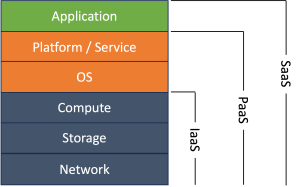
As more and more businesses shift to the cloud and micro-services, the scope of responsibility for security and operations gets pushed up the stack. As a result of this scope compression, teams no longer need to worry about maintaining physical infrastructure like deploying servers, provisioning storage systems or managing network devices. As this scope falls off, the question becomes – are traditional IT roles still relevant in today’s modern security org?

Cloud Service Models

First, let’s talk about cloud service models most companies will consume because this is going to determine what roles you will need within your security organization. This post is also assuming you are not working at a hyper-scale cloud organization like AWS, Azure, Google Cloud or Oracle because those companies still deploy hardware as part of the services they consume internally and provide to their customers.

Infrastructure as a Service (IaaS)

Infrastructure as a Service (IaaS) is what you typically think of when you consume resources from a Cloud Service Provider (CSP). In IaaS, the CSP provides and manages the underlying infrastructure of network, storage and compute. The customer is responsible for managing how they consume these resources and any application that are built on top of the underlying IaaS.

Platform as a Service (PaaS)

In Platform as a Service (PaaS), the cloud service provider manages the underlying infrastructure and provides a platform for customers to develop applications. All the customer needs to do is write and deploy an application onto the platform.

Software as a Service (SaaS)

With Software as a Service (SaaS) customers consume software provided by the cloud service provider. All the customer needs to worry about is bringing their own data or figuring out how to apply the SaaS to their business.

IaaS, PaaS & SaaS Cloud Service Provider Logical Model

As you can see from the above model, organizations that adopt cloud services will only have to manage security at certain layers in the stack (there is some nuance to this, but let’s keep it simple for now).

What Are Some Traditional IT Roles?

There are a variety of traditional information technology (IT) roles that will exist when an organization manages their own hardware, network connections and data centers. Some or all of these roles will no longer apply as companies shift to the cloud. Here is a short list of those roles:

  • Hardware Engineer – Server and hardware selection, provisioning, maintenance and management (racking and stacking)
  • Data Center Engineer – Experience designing and managing data centers and physical facilities (heating, cooling, cabling, power)
  • Virtualization Administrator – Experience with hypervisors and virtualization technologies*
  • Storage Engineer – Experience designing, deploying and provisioning physical storage
  • Network Engineer – Experience with a variety of network technologies at OSI layer 2 and layer 3 such as BGP, OSPF, routing and switching

*May still be needed if organizations choose to deploy virtualization technologies on top of IaaS

Who Performs Traditional IT Roles In The Cloud?

Why don’t organizations need these traditional IT roles anymore? This is because of the shared service model that exists in the cloud. As a customer of a cloud service provider you are paying that CSP to make it easy for you to consume these resources. As a result you don’t have to worry about the capital expenditure of purchasing hardware or the financial accounting jujitsu needed to amortize or depreciate those assets.

In a shared service model the CSP is responsible for maintaining everything in the stack for the model you are consuming. For example, in the IaaS model, the CSP will provide you with the network, storage and compute resources you have requested. Behind the scenes they will make sure all these things are up to date, patched, properly cooled, properly powered, accessible and reliable. As a CSP IaaS customer, you are responsible for maintaining anything you deploy into the cloud. This means you need to maintain and update the OS, platform, services and applications that you install or create on top of IaaS as part of your business model.

Everything Is Code

One advantage of moving to the cloud is everything becomes “code”. In an IaaS model this means requesting storage, networking, compute, deploying the OS and building your application are all code. The end result of everything is code means you no longer need dedicated roles to provision or configure the underlying IaaS. Now, single teams of developers can provision infrastructure and deploy applications on demand. This skillset shift resulted in an organizational shift that spawned the terms developer operations (DevOps) and continuous integration / continuous delivery (CI/CD). Now you have whole teams deploying and operating in a continuous model.

Shift From Dedicated Roles To Breadth Of Skills

Ok, but don’t we still need traditional IT skills in security? Yes, yes you do. You need the skills, but not a dedicated role.

Imagine a model where everyone at your company works remotely from home and your business model is cloud native, using PaaS to deploy your custom application. As the CISO of this organization, what roles do you need in your security team?

From a business standpoint, you still need to worry about data and how it flows, you need to worry about how your applications are used and can be abused, but your team will primarily be focused on making sure the code your business uses to deploy resources and applications in the cloud is secure. You also need to make sure your business is following appropriate laws and regulations. However, you will no longer need dedicated people managing firewalls, routers or hardening servers.

What you will need is people with an understanding of technologies like identity, networking, storage and operating systems. These skills will be necessary so your security team can validate resources are being consumed securely. You will also need a lot of people who understand application security and you will need compliance folks to make sure the services you are consuming are following best practices (like SOC 2 and SOC 3 reports).

What Do You Recommend For People Who Want To Get Into Security Or Are Deciding On A Career Path?

I want to wrap up this post by talking about skills I think people need to get into security. Security is a wonderful field because there are so many different specialization areas. Anyone with enough time and motivation can learn about the different areas of security. In fact, the U.S. Government is kind enough to publish a ton of frameworks and documents talking about all aspects of security if you have the time and motivation to read them. That being said, if I was just starting out in security I would advise people to first pick something that interests them.

  • Are you motivated by building things? Learn how to be a security engineer or application security engineer. Learn how to script, write code and be familiar with a variety of technologies.
  • Are you motivated by breaking things? Learn how to be a penetration tester, threat hunter or offensive security engineer.
  • Do you like legal topics, regulations and following the rules? Look into becoming an auditor or compliance specialist.
  • Do you like detective work, investigating problems and periodic excitement? Learn how to be an incident response or security operations analyst.

Ask Questions For Understanding

The above questions and recommendations are just the tip of the iceberg for security. My biggest piece of advice is once you find an area that interests you start asking a lot of questions. Don’t take it for granted that your CSP magically provides you with whatever resources you ask for. Figure out how that works. Don’t blindly accept a new regulation. Dissect it and understand the motivation behind it. Don’t blindly follow an incident response playbook. Understand why the steps exist and make suggestions to improve it. If a new vulnerability is released that impacts your product, understand how and why it is vulnerable. The point is, as a security professional the more understanding you have of why things exist, how they work and what options you have for managing them, the more skills you will add to your resume and the more successful you will be in your career, especially as your security org collapses roles as a result of moving to the cloud.

The Dichotomy Of Security

If you have ever read Extreme Ownership or The Dichotomy of Leadership by Jocko Willink, then you will be familiar with the concept of dichotomy and how opposing forces of a skill set can compliment each other. Mastering both sides can allow flexibility and increase the effectiveness of that skill set when dynamically applied to a given situation. This is true in the security space, where fundamental opposing forces need to be balanced in order to manage risk and achieve success. Let’s take a look at a few examples.

Security Extremes

The easiest example of the dichotomy of security is to look at the extremes. Security professionals jokingly say the most secure company is one that is not connected to the internet. While this may be true, it will also prevent the company from conducting business effectively and so the company will cease to exist and security will no longer be needed.

On the other end of the spectrum there is the extreme of a business that has zero security and so there are no impediments to conducting business. While this may sound great to some, the reality is the company will be unable to effectively conduct business because of the real threats that exist on the internet. In the situation the company will also cease to exist because they will be hacked into oblivion.

It is obvious there is a dichotomy between no security and no connectivity and these forces need to be appropriately balanced for a security program to be effective, while allowing the business to operate.

Manual vs Automated Security

Another example of dichotomy is between manual security tasks and automation. While every CISO I know is striving to increase automation of security tasks, the reality is humans are still going to be needed in any security program for the foreseeable future.

Manual tasks are ideal for situations where humans need to demonstrate creativity, intuition or make complex decisions based on subtle context. Security functions like penetration testing, threat hunting, red teaming and offensive security require high amounts of skill and experience that automation, like AI, hasn’t been able to replicate. Additionally, soft skills such as reporting to the board, shifting culture, building alliances and making prioritization decisions are all extremely complex and unlikely candidates for automation. However, while manual activities benefit activities that require a high degree of creativity, they are inherently slow and can impede the normal flow of business.

Recently, the advances in automation and artificial intelligence have exponentially increased their usefulness. Automation is extremely useful for offloading repeatable tasks that lend themselves to being programmatically defined. For example, attack simulation products have made huge strides in offloading repetitive tasks of reconnaissance, enumeration, vulnerability assessment and remedial exploitation. We are seeing additional advances in automation related to incident response where events can be correlated and specific activities in an IR playbook can be completed to offload analysts and help focus their attention. AI has also helped to offload lower level operational activities like call centers and help desk inquiries.

While automation may accelerate parts of the business and offload humans from repeatable tasks, it does introduce complexity, which can be difficult to troubleshoot or can cause outright failures. Automation is also rigid because it is only as good as the parameters of the process it is following. This means it can’t think outside of the box or demonstrate creativity. There is also the risk of introducing bias into your processes if your underlying model is flawed.

As you can see manual security processes and automated security processes are opposing forces that need to be balanced based on the skill of your security team and the needs of the business.

The Human Problem

The last dichotomy I want to discuss is the human problem in security. Humans are necessary because of their creativity, diversity and capacity for adapting to an infinite number of situations. However, the flexibility in human nature also presents one of the fundamental security problems – how to you protect against human nature?

The reality is humans are flawed, but in a good way. Threat actors can try to take advantage of these flaws, whether they are logical (like firewall rules) or physical (like human psychology). Humans are essential to every aspect of a business and so we have to figure out how to protect them. The most difficult balance in security is developing a program that is comprehensive enough to protect against human nature without stifling it.

The Security Ideal

The ideal security program will recognize the dichotomy of the security challenges it faces and balance them accordingly. The ideal security program balances security with flexibility. We are seeing this balance manifest in mature security programs via concepts like security guard rails and the paved path. The paved path and guard rails attempt to allow a certain amount of latitude for acceptable behavior, while being rigid enough to protect users and the business accordingly.

Application In Other Domains

The concept of dichotomy is universal across any domain. In fact, this is an area of extensive research in disciplines like mathematics, computer science, military strategy, and economics. Specifically, in the space of network and graph theory there is a concept call max flow, min cut. These are counter principles that are opposite, yet complimentary. If you think of any network (road, supply chain, computer network, etc.) the point of maximum flow across that network is also the point where maximum disruption (minimum cut) can occur. From a military or security stand point you will want to protect the max flow/min cut, but from an attacker stand point, the max flow / min cut, is the area that will require the least amount of effort for maximum damage. Pretty neat!

Wrapping Up

An effective security program will balance the needs of security with the needs business with the ultimate goal of effectively managing risk. A critical skill for any security practitioner is to be flexible and adaptive. Specifically, by recognizing that security issues have two sides to them, security practitioners can demonstrate empathy towards the business and find an appropriate balance that can protect without impeding the business.