How Should CISOs Think About Risk?

There are a lot of different ways for CISOs to think about and measure risk, which can be bucketed into two different categories. Qualitative measurement, which is a subjective measurement that follows an objective process or quantitative measurement, which is an objective measurement grounded in dollar amounts. Quantitative risk measurement is what CISOs should strive to achieve for a few reasons. One, it grounds the risk measurement in objective numbers which removes people’s opinions from the calculation; two, it assesses risk in terms of dollar amounts, which is useful for communicating to the rest of the business; and three, it can highlight areas of immaturity across the business if they are unable to quantify how their division contributes to the overall bottom line of the company. In this post I want to explore how CISOs should think about quantitatively measuring risk and in particular, measuring mitigated, unmitigated and residual risk for the business.

Where should you start?

A good place to start is with an industry standard risk management framework like NIST 800-37, CIS RAM or ISO 31000 and for the purposes of this post I’ll stick with the NIST 800-37 to be consistent. In order for CISOs to obtain a qualitative risk assessment from the NIST 800-37 they need to add a step into the categorize step by working with finance and the business owners to understand the P&L of the system(s) they are categorizing. The first step is to go through every business system and get a dollar amount (in terms of revenue) for how much the systems(s) contribute to the overall bottom line of the business.

Internal and External Security Costs

After you get a revenue dollar amount for every set of systems, you now need to move to the assess stage of the NIST 800-37 RMF to determine which security controls are in place to protect the systems, how much they cost and ultimately what percentage the security controls cover. There are two categories of security controls and costs you will need to build a model for. The first category is internal costs, which includes:

  • Tooling and technology
  • Licenses
  • Training
  • Headcount (fully burdened cost)
  • Travel
  • R&D
  • Technology operating costs (like cloud costs directly attributable to security tooling, etc.)

The second category is external costs, which includes:

  • 3rd party penetration tests
  • Audits
  • Managed Security Service Provider (MSSP) costs
  • Insurance

As you fill in the costs or annual budget for each of these items you can map the coverage of these internal and external costs to your business to determine the total cost of your security program and how much risk the program is able to cover (in terms of a percentage).

Mapping Risk Coverage

Once you have all of these figures you can start to map risk coverage to determine if your security program is effectively protecting the business. Let’s say your business generates $1B in annual revenue. Your goal as a CISO is to maintain a security program that provides $1B of risk coverage of the business. Or, if you are unable to provide total coverage, then you need to communicate which parts of the business are not protected so the rest of the C-Suite and board can either accept the risk or approve additional funding.

As a simple example, let’s say you spend $1M/year on a SIEM tool, which takes 6 people to operate and maintain. The total cost of the 6 people is approximately $6M / yr (including benefits, etc.). The SIEM and people provide 100% monitoring coverage for the business and the SIEM and people can be mapped to 20% of your security controls in NIST. I’m skipping a lot of details for simplicity, but for a $1B business this means your SIEM function costs $7M / yr, but protects $200M of revenue ($1B x 20%). As you map the other tools, processes, people, etc. back to the business you will get a complete picture of how much risk your security program is managing and make informed decisions about your program to the board.

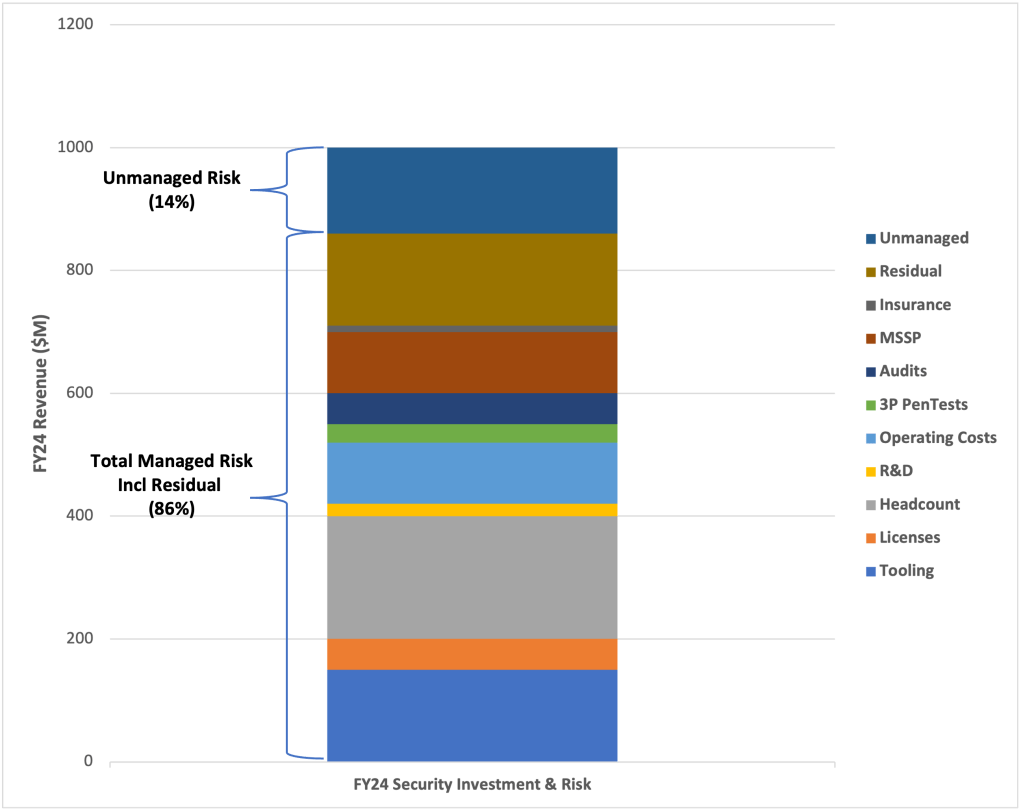
For example, you may find your security program costs $100M / year, but is only able to manage risk for $750M (75%) of the business. Your analysis should clearly articulate whether this remaining 20% of risk is residual (will never go away and is acceptable) or is unmanaged and needs attention.

Complete The Picture

By mapping your security program costs to the percentage of controls they cover and then mapping those controls to the business, CISOs should be able to get an accurate picture of the effectiveness of their security program. By breaking out the security program costs into the internal and external categories I’ve listed above, they can also compare and contrast the costs to the total amount of risk to determine which investments yield the best value. These analyses can be extremely effective when having conversations with the rest of the C-Suite or board, who may be inclined to decline additional budget requests or subjectively recommend a solution. By informing these stakeholders of the cost per control and the risk value of that cost, you can help them support your recommendation for additional investment to help increase risk management coverage or to help increase the value of risk management provided by the security program.

The following chart is an example of what this analysis can yield.

Once you have this data and analysis you can start driving conversations with the rest of the C-Suite and the board to inform them of how much risk is being managed, how much is residual, how much risk is unmanaged and your recommendation for additional investment (or acceptance). These conversations can also benefit from further analysis such as the ratio of cost to managed risk to determine which investment is providing the best value and ultimately support your recommendation for how the company should manage this risk going forward (people or technology).

Wrapping Up

Managing P&L is a fundamental skill for all CISOs to master and can help drive conversations across the company for how risk is being managed. CISOs need to master skills in financial analysis and partner with other parts of the business like business operations or business owners to understand how the business operates and what percentage of the business is effectively covered by the existing security program. The results of this analysis will help CISOs shape the conversation around risk, investment and ultimately the strategic direction of the business.

Should CISOs Be Technical?

Don’t want to read this? Watch a video short of the topic here.

There are a lot of different paths to becoming a CISO and everyone’s journey is different, however two of the most common paths are coming up through the technical ranks or transitioning over from the compliance function. Coming up through the technical ranks is common because cybersecurity is a technically heavy field, particularly when attempting to understand the complexities of how exploits work and the best way to defend against attackers. Coming up through the compliance ranks is also common because companies are often focused on getting a particular compliance certification in order for them to conduct business and interact with the customers. Each of these paths offers advantages and disadvantages, but I will argue being technical is more challenging than some of the softer cybersecurity disciplines like compliance, which leads to a common question – do CISOs need to be technical?

Yes, but…

If you don’t want to read any further the short answer is yes, CISOs need to be technical. The longer answer is, being technical is a necessary, but insufficient characteristic of a well rounded CISO. The reason being technical is insufficient is because for the past few years the CISO role at public companies has been transforming from a technical role to a business savvy executive role. CISOs are expected to report to the board, which requires speaking the language of business, risk and finance. I have seen CISOs quickly lose their audience in board meetings when they start talking about tooling, vulnerabilities and detailed technical aspects of their security program. CISOs need to be able to translate their security program into the language of risk and they need to be savvy enough to weave in financial and business terminology that the board and other C-Suite executives will understand.

Obtain (and maintain) A Technical Grounding

Even though being technical is no longer sufficient for a well rounded CISO it is important for a CISO to obtain or maintain a technical grounding. A technical grounding will help the CISO translate technical concepts (like vulnerabilities and exploits) into higher level business language like strategy, risk or profit and loss (P&L). It is also important for a CISO to understand technical concepts so they can dig in when needed to make sure their program is on track or controls are operating effectively. Lastly, it is important to maintain technical credibility with other technical C-Suite stakeholders like the CTO and CIO. Speaking their language will help align these powerful C-Suite members with your security program, who can then lend critical support when making asks for the rest of the C-Suite or board.

What other skills does a CISO need?

In addition to a technical grounding, there are a number of skills CISOs need to master in order to be effective in their role. The following is a short list of skills CISOs need to have in order to be successful at a public company:

  • Executive presence and public speaking skills with the ability to translate security concepts into business risk that resonates with senior executives and the board
  • Ability to lead and communicate during a crisis
  • Politically savvy, with ability to partner with and build alliances with other parts of the business
  • Ability to understand the core parts of the business, how they operate and what their strategy is
  • Ability to explain the “value” of your security program in business and financial terms
  • Strong understanding of financial concepts such as CAPEX, OPEX, P&L, budgeting and ability to understand balance sheets, earning results and SEC filings
  • Understand and navigate legal concepts (such as privilege), regulations and compliance activities with the ability to map these concepts back to your security program or testify in court (if needed)
  • Ability to interact with auditors (when needed) to satisfy compliance asks or guide responses
  • Ability to interact with customers to either reassure them about the maturity of your security program or act as an extension of the sales team to help acquire new customers
  • Interact with law enforcement and other government agencies, depending on the nature of the business

If this seems like a long list that doesn’t fit your concept of what a CISO does, then you may have some weaknesses you need to work on. This list also reflects the evolving nature of the CISO role, particularly with respect to board interaction and leadership at public companies. More importantly, a lot of these concepts are not covered in popular security certifications and you definitely won’t get all of this experience from start ups or non-public companies. That is ok, because recognizing and acknowledging your weaknesses is the first step to becoming a better CISO.

Are Security Certifications Worth Renewing?

Almost weekly I see someone post a question on social media asking: “Is renewing my security certification worth it?” This is a valid question since security certifications are often expensive, time consuming and hard won. Maintaining your security certification may be required to land a new job, but not required to continue in the role. At the end of the day the question people are really asking is: “Is the continued expense of this certification worth it after I’ve landed the role I’m after or achieved my career objectives?” In this post I’ll explore the pros and cons of renewing a security certification and wrap up with my specific recommendation for those of you looking for guidance.

Getting Certifications

There are a number of popular security certifications that can demonstrate general or specific expertise. Some of the most popular are:

  • CISSP
  • CISM
  • CEH
  • Security+
  • CISA
  • CCSP

Along with the variety of certifications there are different ways to earn a certification. The least expensive and most time consuming is to purchase the course material, self study and then sit for the exam. The most expensive and least time consuming is to attend a boot camp and then test for the exam on the last day. If you are lucky your employer will pay for or reimburse the expense of the certification. No matter which way you go, there is a material cost in terms of dollars and time. This cost can make people reluctant to let certifications expire because the certifications have a high barrier to entry, but a (relatively) low maintenance cost.

Pros To Renewing

One of the main reasons to continue to maintain your certification is because they are required by some job roles in order to be hired and perform the role. One example of this is in the U.S. Government Department of Defense (DoD) 8570 Approved Baseline Certifications. The 8570 specifies “Personnel performing IA functions must obtain one of the certifications required for their position, category/specialty and level to fulfill the IA baseline certification requirement.” So if you want the job, and want to keep the job, then you need the certification.

In addition to job requirements, maintaining an active certification gives the impression of having expertise in a particular area. Demonstrating expertise is useful when speaking, consulting, providing legal testimony or simply cementing your position as an expert in the field of security. Expertise is useful when trying to land a new role or get a promotion. This can also be useful to limit personal liability if you can demonstrate you followed the best practices indicated by the certification. Maintaining a certification and this expertise is arguably a low cost, low effort activity with a lot of upside and not a lot of downside. Even though there is a dollar cost for renewal, this is a minor amount compared to the overall expense or time invested in getting the certification in the first place.

One final reason to maintain your security certifications is because it demonstrates you have a baseline level of knowledge as indicated by the certification. When you were studying and testing for the certification you were learning new concepts and confirming mastery of other concepts. This can be useful to validate your expertise, but also to demonstrate to others that you have mastered these concepts and can operate at the same level as other individuals that have the certification. This goes beyond demonstrating expertise in that is establishes a baseline of knowledge for security practitioners in the field and this is why employers often list specific certifications on job descriptions.

Cons To Renewing

Even though there are a number of benefits to maintaining a certification, there are also a lot of cons.

First, there is the obvious annual cost for renewing the certification. Not only is there a dollar cost, but there is also usually a time cost in the form of continuing education credits that have to be earned and submitted throughout the year. The idea is to drive engagement in the security community by requiring these continuing education credits, but in my opinion this has had mixed results. For anyone on the fence about renewing a certification the time and dollar cost can be the breaking point where it no longer makes sense to continue to invest in something that isn’t demonstrating continued value.

Speaking of continued value, what are you really getting by spending time on continuing education and paying the renewal fee? You get the privilege to list the certification on your resume, but you’ve already gained the knowledge and passed the test. Renewing doesn’t typically require another test so is there really continued value (assuming you aren’t required to maintain it for your job)? The value is questionable if it isn’t required and so it can be difficult to justify maintaining.

Another downside to maintaining the certification is the continuing education credits. There are a number of low cost or free ways to earn credits, but it can be difficult or almost impossible to get to the required number without spending money. This is a con in my opinion because renewing the certification is perpetuating additional expenses such as more certifications, attending more conferences or other expenses just to earn enough credits. This means even though there is a low renewal cost, there can be a really high dollar or time cost to earn enough continuing education credits to maintain the certification.

In the pros section I listed the DoD 8750, which requires certain certifications to obtain and perform certain roles. However, requiring certifications for a job can also have a downside by eroding the exclusivity of the certification. This happened to the MCSE in the late 90’s and early 2000’s when everyone wanted an MCSE because it paid really well. However, soon everyone had it even if they weren’t doing the job and the MCSE became useless. It was no longer a good barometer for demonstrating expertise because so many non experts had it. Some security certifications are the same way and the DoD 8570 (or other employers) can contribute to this erosion of exclusivity if the people earning the certification are simply getting it to fill the role instead of becoming experts in the field.

One last con for renewing certifications is you may no longer be doing the type of job that requires the certification. In the past I held the GCIH, GREM and GPEN certifications, but I no longer do those hands on activities so it doesn’t make sense for me to maintain those certifications. If your career has taken you on a different path, then you no longer need to maintain the cert. Also, I will argue your job title can be more useful to demonstrate expertise than a certification. This isn’t always the case and this can sometimes be difficult to tease out with discretionary titles, but generally if you have carried the CISO or CSO title in some capacity do you really need to maintain an active certification? I’ve seen several individuals list their expired certifications on their resume, which continues to demonstrate the expertise, but without the added expense.

My Recommendation

If you are on the fence about whether or not to renew your security certification here is a simplistic flow chart for helping you with the decision. Feel free to recreate and add your own additional criteria as necessary.

My particular recommendation is as follows: if you want to maintain the credibility, demonstrate expertise, are still doing the job and can afford the renewal cost (both time and dollar), then renewing is typically not too expensive and worth it. I am also seeing a lot of job descriptions require active certifications so if you are about to job hunt or at risk of getting laid off then maintaining your certifications is a good idea. If you are no long doing the job, don’t need the credibility or expertise and the certification isn’t required by your job then I suggest no longer renewing and focusing on other areas. In my case, I have dropped most of the specialist certifications, while maintaining the generalist certifications in line with my role.

Navigating Hardware Supply Chain Security

Lately, I’ve been thinking a lot about hardware supply chain security and how the risks and controls differ from software supply chain security. As a CSO, one of your responsibilities is to ensure your supply chain is secure, yet the distributed nature of our global supply chain makes this a challenging endeavor. In this post I’ll explore how a CSO should think about the risks of hardware supply chain security, how they should think about governing this problem and some techniques for implementing security assurance within your hardware supply chain.

What Is Hardware Supply Chain?

Hardware supply chain relates to the manufacturing, assembly, distribution and logistics of physical systems. This includes the physical components and the underlying software that comes together to make a functioning system. A real world example could be something as complex as an entire server or something as simple as a USB drive. Your company can be at the start of the supply chain by sourcing and producing raw materials like copper and silicon, at the middle of the supply chain producing individual components like microchips, or at the end of the supply chain assembling and integrating components into an end product for customers.

What Are The Risks?

There are a lot of risks when it comes to the security of hardware supply chains. Hardware typically has longer lead times and longer shelf life than software. This means compromises can be harder to detect (due to all the stops along the way) and can persist for a long time (e.g. decades in cases like industrial control systems). It can be extremely difficult or impossible to mitigate a compromise in hardware without replacing the entire system (or requiring downtime), which is costly to a business or deadly to a mission critical system.

The risk of physical or logical compromise can happen in two ways – interdiction and seeding. Both involve physically tampering with a hardware device, but occur at different points in the supply chain. Seeding occurs during the physical manufacture of components and involves someone inserting something malicious (like a backdoor) into a design or component. Insertion early in the process means the compromise can persist for a long period of time if it is not detected before final assembly.

Interdiction happens later in the supply chain when the finished product is being shipped from the manufacturer to the end customer. During interdiction the product is intercepted en route, opened, altered and then sent to the end customer in an altered or compromised state. The hope is the recipient won’t detect the slight shipping delay or the compromised product, which will allow anything from GPS location data to full remote access.

Governance

CSOs should take a comprehensive approach to manage the risks associated with hardware supply chain security that includes policies, processes, contractual language and technology.

Policies

CSOs should establish and maintain policies specifying the security requirements at every step of the hardware supply chain. This starts at the requirements gathering phase and includes design, sourcing, manufacturing, assembly and shipping. These policies should align to the objectives and risks of the overall business with careful consideration for how to control risk at each step. An example policy could be your business requires independent validation and verification of your hardware design specification to make sure it doesn’t include malicious components or logic. Or, another example policy can require all personnel who physically manufacture components in your supply chain receive periodic background checks.

Processes

Designing and implementing secure processes can help manage the risks in your supply chain and CSOs should be involved in the design and review these processes. Processes can help detect compromises in your supply chain and can create or reduce friction where needed (depending on risk). For example, if your company is involved in national security programs you may establish processes that perform verification and validation of components prior to assembly. You also may want to establish robust processes and security controls related to intellectual property (IP) and research and development (R&D). Controlling access to and dissemination of IP and R&D can make it more difficult to seed or interdict hardware components later on.

Contractual Language

An avenue CSOs should regularly review with their legal department are the contractual clauses used by your company for the companies and suppliers in your supply chain. Contractual language can extend your security requirements to these third parties and even allow your security team to audit and review their manufacturing processes to make sure they are secure.

Technology

The last piece of governance CSOs should invest in is technology. These are the specific technology controls to ensure physical and logical security of the manufacturing and assembly facilities that your company operates. Technology can include badging systems, cameras, RFID tracking, GPS tracking, anti-tamper controls and even technology to help assess the security assurance of components and products. The technologies a CSO selects should complement and augment their entire security program in addition to normal security controls like physical security, network security, insider threat, RBAC, etc.

Detecting Compromises

One aspect of hardware supply chain that is arguably more challenging than software supply chain is detection of compromise. With the proliferation of open source software and technologies like sandboxing, it is possible to review and understand how a software program behaves. Yet, it is much more difficult to do this at the hardware layer. There are some techniques that I have discovered while thinking about and researching this problem and they all relate back to how to detect if a hardware component has been compromised or is not performing as expected.

Basic Techniques

Some of the more simple techniques for detecting if hardware has been modified is via imaging. After the design and prototype is complete you can image the finished product and then compare all products produced against this image. This can tell you if the product has had any unauthorized components added or removed, but it won’t tell you if the internal logic has been compromised.

Another technique for detecting compromised components is similar to unit testing in software and is known as functional verification. In functional verification, individual components have their logic and sub-logic tested against known inputs and outputs to verify they are functioning properly. This may be impractical to do with every component if they are manufactured at scale so statistical sampling may be needed to probabilistically ensure all of the components in a batch are good. The assumption here is if all of your components pass functional verification or statistic sampling then the overall system has the appropriate level of integrity.

To detect interdiction or logistics compromises companies can implement logistics tracking such as unique serial numbers (down to the component level), tamper evident seals, anti-tamper technology that renders the system inoperable if tampered with or makes it difficult to tamper with something without destroying it and even shipping thresholds to detect shipping delay abnormalities.

Advanced Techniques

More advanced detection techniques for detecting compromise can include destructive testing. Similar to statistical sampling, destructive testing involves physically breaking apart a component to make sure nothing malicious has been inserted. Destructive testing makes sure the component was physically manufactured and assembled properly.

In addition to destructive testing, companies can create hardware signatures that include expected patterns of behavior for how a system should physically behave. This is a more advanced method of functional testing where multiple components or even finished products are analyzed together for known patterns of behavior to make sure they are functioning as designed and not compromised. Some hardware components that can assist with this validation are technologies like Trusted Platform Modules (TPM).

Continuing with functional operation, a more advanced method of security assurance for hardware components is function masking and isolation. Function masking attempts to mask a function so it is more difficult to reverse engineer the component. Isolation limits how components can behave with other components and usually has to be done at the design level, which effectively begins to sandbox components at the hardware level. Isolation could rely on TPM to limit functionality of components until the integrity of the system can be verified, or it could just limit functionality of one component with another.

Lastly, one of the most advanced techniques for detecting compromise is called 2nd order analysis and validation. 2nd order analysis looks at the byproduct of the component when it is operating by looking at things like power consumption, thermal signatures, electromagnetic emissions, acoustic properties and photonic (light) emissions. These 2nd order emissions can be analyzed to see if they are within expected limits and if not it could indicate the component is compromised.

Wrapping Up

Hardware supply chain security is a complex space given the distributed nature of hardware supply chains and the variety of attack vectors spanning physical and logical realms. A comprehensive security program needs to weigh the risks of supply chain compromise against the risks and objectives of the business. For companies that operate in highly secure environments, investing in advanced techniques ranging from individual component testing to logistics security is absolutely critical and can help ensure your security program is effectively managing the risks to your supply chain.

References:

Guarding Against Supply Chain Attacks Part 2 (Microsoft)

Long-Term Strategy for DoD Trusted Foundry Needs (ITEA)

Accelerate Your CISO Career By Investing In Your Brand

When I was in the military there was a single consistent phrase that was repeated to us over and over again – reputation matters. Even though the military is a large organization, your specialization creates a small group and so how you perform and behave will stay with you throughout your career. This concept is no different from the security industry. How you demonstrate expertise, how you present yourself publicly and how you engage with the rest of the industry all contribute to your reputation. In this post I’ll explore why reputation is so important, activities that can contribute (or detract) from your reputation and how your reputation can accelerate your career.

Your Reputation Is Your Brand

Social media has made it extremely easy to have an online presence and it is easy to contribute to your profile using your device of choice. Sites like LinkedIn, WordPress and Medium have made it possible to have a digital resume documenting your career history, expertise and daily interactions with others. All of these interactions contribute to your reputation and ultimately your brand. But, what is brand and what does it mean to have a brand? Let’s dig into this.

What Is Brand?

Your brand is your reputation, but it is also broader than that. Reputation is whether individuals and your community view interactions with you in a positive or negative way. You reputation is a reflection of trust, credibility and reliability (or lack thereof). Brand is an extension of this foundation of trust. It is how you externally market yourself to people inside and outside your community and can be viewed as taking an active role in managing how people view you.

Why Should I Care About My Brand?

Whether you like it or not you have a brand. If you use the internet, play video games or use free services (like Gmail) you are discoverable on the internet. You should care about your brand because if you don’t actively manage how you are perceived, then you could be perceived in a negative way. Another way to think about brand is: there is a conversation happening around you whether you like it or not. Participating in and leading that conversation is going to be beneficial and advantageous to your brand (otherwise someone will do it without you).

Furthermore, if you aspire to land a top CISO position at a public company you can expect the company to research your background using publicly available sources like LinkedIn. They will do this not only to determine if you are a good fit for the role, but also as a way to understand and manage their brand and reputation. They don’t want to hire someone who has a bad reputation, whose viewpoints don’t match with their culture or could be a liability to the company.

Unapologetically Build Your Brand

Let’s talk about ways to build your brand. First, the nature of our business can make security professionals reluctant to talk about themselves, but you need to set aside the notion that there is something wrong with promoting yourself. You are your own best cheerleader and no one knows about your strengths, accomplishments or expertise better than you. You are your own best advocate and you should embrace your role as lead brand ambassador.

I regularly see people on social media disparaging the notion of self promotion. They claim people who self promote are merely influencers and not actual practitioners of the role. This is completely false and you need to ignore this type of negativity. Some of the best practitioners constantly promote themselves (like Bruce Schneier and Brian Krebs) as a way to build their brand and demonstrate expertise.

Separate Your Brand From Your Company

Second, it is important your brand is separate from your company. Unless you own your own company, don’t fall into the trap of parroting all of the marketing material of the company you work for. The reason why you don’t want to do this is because you will work for different companies over the course of your career and if you tie your brand to your company, your brand could evaporate overnight if you change companies. Additionally, only posting about your company and current role will limit your ability to demonstrate expertise in a broader context. This means you could be viewed as unqualified for roles that require a broader skillset, larger scope or different industry.

Actively Manage Your Brand

Third, actively manage your brand by regularly doing an internet search of yourself to see how others may view you. If you see articles, podcasts, pictures, references, etc. that don’t align to the brand you are trying to cultivate, then follow the appropriate steps to request to remove those things from search or from the site hosting them. Your brand will evolve as your career evolves and there is nothing wrong with curating older content that no longer aligns to the current vision you have for yourself.

Building Your Brand

Brand is a tricky thing and as one of the people on my team likes to say: “reputation arrives on foot and leaves on horseback.” I equate brand and reputation to holding a baby bird – if you don’t hold on it will fly away, but if you hold on too tight you will crush it.

There are a lot of things you can do to build your personal brand starting with your personal vision. If you aspire to be a CISO at a public company then you need to model yourself after someone in that role. Having a good mentor is essential to identifying and understanding your current strengths and weaknesses so you can begin to model and demonstrate the skills, behaviors and expertise of the role you want.

Second, you need to demonstrate expertise and credibility for the role you aspire to achieve. Getting certifications is good, but certs aren’t enough. You need to participate in industry events like chapter meetings, conferences, round tables and networking events. It also means actively participating in the industry in a public way. Showing up at the aforementioned events isn’t enough, you need to actively participate and have a voice. Actively participating in the industry can consist of submitting a conference talk, giving a talk at your local chapter event, starting a blog or even just adding insightful comments on LinkedIn. The point is your active participation will establish your voice and begin to establish your brand, reputation, credibility and expertise.

Most importantly, be consistent. Don’t just show up when you need something or when your dream job opens up, but that time it is too late. You need to have a history of consistently contributing and demonstrating expertise. Being consistent also means following through and executing on your commitments. If you say you are going to do something, then do it. Your ability to execute and follow through will resonate with everyone you interact with, so being consistent is incredibly important for building a positive brand.

Think of your brand as a never ending resume. If companies or people search for you then they should be able to get some idea of who you are, what expertise you have and how you think as a CISO. The breadth of your brand should cover all conceivable topics a CISO may be asked to perform such as leadership, operations, compliance, board interactions, technical evaluations, etc. This expertise needs to be applicable to a variety of industries and companies to maximize your brand potential and maximize your ability to land your next role.

Destroying Your Brand

Positive interactions through conversations, posts, talks, etc. are the best way to build your brand, but it is even easier to destroy your personal brand. Here are a few things I’ve seen that can cause a negative reflection on your brand.

Negative Interactions

Trolling folks on social media or negatively interacting with people is a quick and easy way to impact your brand. People don’t want to be around someone that is negative, gate keeps the industry or consistently tears people down. A quick way to evaluate if your interactions are negative is if people are liking your comments or positively engaging with you. If you aren’t getting engagement or follow up to your posts you may want to re-think your approach. An easy way to measure your brand is by number of followers, connections, views or likes (depending on the platform). If you aren’t seeing this number grow you probably need to rethink your approach.

Misrepresenting Yourself

Another way to impact your brand and reputation is by mis-representing yourself. This can harm your brand in a few ways – first, it is easy for folks to determine if you really can do the things you say. If you don’t have the expertise, but claim you do, people will know and begin to avoid you. Second, the security community is a small one and mis-representing yourself will trickle around to others and inhibit your ability to get onto the shortlist for the biggest roles. The top roles usually involve a lot of back channeling to understand who will be the best candidate. Misrepresenting yourself is a quick way to get taken off the short list of candidates. Lastly, misrepresenting yourself not only causes noise for the rest of the community, but directly relates to the previous paragraph of negative interactions. A lot of times the most bizarre or negative interactions I have seen are coming from people that claim they have expertise, but clearly don’t. Your title, byline, profile summary, etc. all contribute to your brand and reputation. It is ok to be open and honest that you aspire to be a CISO, but claiming you have had a title you haven’t will directly harm your personal brand.

Oversharing

This is a tricky one to navigate, especially in our digital world, but oversharing can be viewed negatively, which will ultimately harm your personal brand. Remember, companies are going to research you and if your posts are consistently inappropriate, demonstrate questionable behavior or air dirty laundry about your life, then this can harm your personal brand and reputation. Posts like this are fine for social media sites that are designed for family and friends, but you may want to steer clear of posting these things on professional sites like LinkedIn. If you are pursuing a top level CISO position consider making your personal social media sites private and only viewable by family and friends. Similarly, clean up your professional sites like LinkedIn by removing questionable posts, comments, etc. A good guideline for LinkedIn is treat it like you are at the office – politics, personal health issues, controversial topics, etc. are best left for private conversations at home.

Hyperbole (The Sky Is Falling)

Another way to harm your personal brand is by constantly posting hyperbole. If you are constantly claiming the sky is falling due to a new vulnerability, new technology, new risk, etc. that can detract from your personal brand. You will quickly become part of the background noise instead of part of the conversation. Instead, add your own flavor or context for how folks should navigate the issue you are posting about to establish credibility and expertise.

Bad Headshots

One final aspect that can harm your personal brand is a bad headshot. Cameras are so good these days that there is really no excuse for a poor headshot. Bad lighting, selfies in a car, pics that clearly have family / friends cropped out are all conveying a poor impression to companies and connections. If you aren’t going to invest in yourself why should they invest in you? Do a little research on how to set up a good headshot and use the portrait mode on your phone to take a decent headshot. Find people on social media that have headshots you admire and try to mimic those. Even better, pay the money for a decent headshot. They will last a few years and speak volumes to potential companies and recruiters. Headshots are your first impression to employers and so they should convey the appropriate level of professionalism for the CISO role you are aspiring to land.

Wrapping Up

Your reputation and brand are important to establish credibility and expertise that you are qualified for a top CISO role. If you aspire to be a top CISO at a public company your brand is a must have to get onto the short list of candidates. Companies research top candidates and rarely hire unknowns into top roles. Establishing a brand for how you think and what you are good at will help demonstrate you are qualified for these roles and differentiate you from other candidates. Build your brand by being consistent, positive and demonstrating breadth. Get a mentor, work on skills and take a decent headshot. Consider your brand like a never ending resume that is difficult to build, but easy to destroy. Actively taking control of your brand will help establish not only how people interact with you, but how they remember. You never know…the next person that remembers you could want you for their open CISO role.

Whats The Difference Between A CSO and CISO?

Like Arnold Schwarzenegger to Danny DeVito in the movie Twins, the Chief Security Officer (CSO) role is the big brother to the Chief Information Security Officer (CISO) role. What is the difference between these two roles and what skills does a CISO need to focus on if they aspire to become a CSO? In this post I’ll explore the role of the Chief Security Officer (CSO) and what additional responsibilities the role covers when compared to the CISO role.

Big Brother

Lately, there has been a lot of focus on the Chief Information Security Officer (CISO) role following the new SEC guidelines, recent ransomware attacks and supply chain security vulnerabilities (XZ). There can be a lot of different titles for the top security executive at a public company, but the two most common titles for a public company are Chief Information Security Officer (CISO) and Chief Security Officer (CSO). The Twins movie is a good analogy to describe the relationship between the CSO and CISO because in the movie Arnold protects Danny DeVito by helping him avoid trouble, while Danny is super scrappy and shows Arnold how the real world works. They complement each other, protect each other and help each other. One is the overall leader and one has a great hustle.

What the Twins analogy highlights is the main difference between a CSO and CISO is scope. A CSO typically has a bigger scope than a CISO. A CISO will have responsibility for all of the information and technology assets of a company, but a CSO will have this responsibility and additional responsibilities for physical security, executive protection, corporate investigations and other non-information technology based security domains. In fact, for public companies that have an established CSO role, it is typical for the CISO role and function to report to the CSO as one overall security function. Let’s dig into some of the additional functions of a CSO.

Like Arnold Schwarzenegger to Danny DeVito in the movie Twins, the Chief Security Officer (CSO) role is the big brother to the Chief Information Security Officer (CISO) role.

Physical Security

One of the biggest responsibilities for a CSO is physical security. Physical security includes site security for offices and the physical security of the personnel working at the facilities were the company operates. This can include things like cameras and video monitoring, badging systems, security and fire alarm systems, safes, locks, lighting, parking and loading docks, contractor access, mail and package security, bollards and traffic control, security guards and gates, fencing, fire suppression and other physical environment aspects. Depending on the nature of your business, this could also involve supply chain security of manufacturing facilities and components, or even critical infrastructure. It can also include tempest and RF control, including design and management of classified spaces.

One interesting aspect of physical security is to work with construction companies or physical security consulting firms to design and assess the security controls of your facilities. Books like Red Cell by Richard Marcinko offer an interesting historical perspective of how the military physically tests the security of their military installations and public companies should similarly consider an annual or periodic review of their physical security for weaknesses and risks.

If your company is involved in manufacturing, another interesting aspect of physical security is supply chain security and logistics. This is ensuring your products are manufactured securely and aren’t tampered with during the manufacturing process. It can also include assessing the security of component manufacturers, assembly plants and even shipping and logistics companies to make sure your products arrive to your customers and are functioning securely.

Lastly, another aspect of the CSO’s physical security responsibilities is interfacing with local and federal law enforcement for trends, threats and dealing with physical disruptions at your places of business like the recent examples of protests at Google offices.

Executive & Travel Protection

Another responsibility of the CSO, which is related to physical security, is executive and travel protection. Executive and travel protection covers how to physically protect your top executives from threats when they are in public, traveling, at their offices or at their homes. This can include arranging trusted transportation, route planning, on site security surveys, sending advanced teams ahead of the execs, kidnap and ransom insurance, medical support and even online reputation management. You may even arrange training for your execs such as mock kidnapping situations or how to deal with other emergency situations (like riots, terrorist attacks, wars or coups).

Executive and travel protection can include interfacing with local embassies, law enforcement or emergency services depending on the threat level of the country your senior execs are visiting. This is in addition to the existing CISO responsibilities of interfacing with law enforcement for security breaches, APTs, ransomware attacks, digital fraud, etc. Exec and travel protection can also include arranging for security companies to beef up the security of their home(s) and arranging to have their home security monitored by a private security company (if this is part of their perquisites).

Lastly, one very important aspect of executive and travel protection is digital device security. This responsibility may get delegated to the CISO, but the CSO still needs to understand and include digital security as comprehensive part of their executive protection strategy. Certain countries are known to be digitally hostile by attempting to siphon information from or compromise the devices of executives at top companies. This can be attempts at industrial espionage, theft of military and defense information, gaining business advantages, disrupting business, leveraging the exec as an attack vector into the broader company, trade advantages or potential blackmail. The CSO should consider these risks based on the destination country and provide appropriate controls to executive devices such as providing burner phones and laptops for specific country use that are sterile and won’t impact the company or personal reputation of the executive if compromised.

Executive and travel protection is important to ensure your top execs are safe and secure when traveling, but also, if your business is controversial or your top execs like to make controversial statements, this function can ensure they are safe and protected no matter what situation they are in.

Corporate Investigations

One final area of responsibility for the CSO is corporate security investigations beyond the normal technology investigations handled by the CISO. Corporate security investigations can include theft, financial crimes, waste, abuse, vandalism, misconduct, bribery and supply chain control (for ITAR or other export / import laws). You may work closely with law enforcement at the state or federal level depending on the nature and scope of the investigation and the CSO function is critical to coordinating the investigation and representing the business appropriately. Corporate investigations can also involve acting as an expert witness or providing testimony in court on behalf of your company.

One important aspect to remember is, CSOs need to have clear processes and policies defined for how and when to involve law enforcement. The decision to involve law enforcement may be based on legal requirements or may be based on other decisions, but involving law enforcement gives up control of the investigation, which could result in property being confiscated as evidence. If the evidence is a critical business asset like IT equipment, the CSO needs to ensure there are redundancies in place so the business is not disrupted or left without that capability while supporting the investigation.

Wrapping Up

The CSO role is an interesting top security executive role and offers a broader scope than the CISO role. CISOs looking to expand their remit should consider establishing credibility in the areas I’ve described above, but should also remember that most professional security certifications like the CISSP cover aspects of physical security as one of the knowledge based domains. If you don’t have a military or law enforcement background, two interesting certifications that can establish physical security credibility for CISOs are ISMA and ASIS. Lastly, CSOs will typically have responsibility for the CISO function (with the CISO reporting to them), but will also have additional remit in areas of physical security, executive protection, travel protection and corporate investigations. In my experience, the CSO role is more interesting because you get involved in all aspects of security for a company allowing you to channel your inner Arnold Schwarzenegger from Twins, while still retaining the option to flex your Danny DeVito (CISO) roots.

When Evaluating A New CISO Role Don’t Forget The SEC 10-K And Other Governance Forms

When evaluating a new CISO role it is common to do research on the company, industry, product line, etc., but an area that is often overlooked are SEC filings like the SEC Form 10-K and board committee charters. SEC filings and committee charters can offer a wealth of information about how a company views and governs key issues like cybersecurity and risk. In this post I’ll cover where to find key information, red flags to watch out for and other useful information that can be discussion topics during the interview process.

Finding The Right Forms

If you are new to reviewing SEC filings and corporate governance documents there are a number of places to find documents about corporate governance and how the company strategically views cybersecurity and risk. These documents will provide insight into who you may need to influence in order to execute a successful security program and it will also give you an implicit understanding of the priority the company assigns to cybersecurity issues. The two best places to find relevant forms are on SEC.gov (Edgar) or on the company’s own investor relations website.

SEC Forms

The most common SEC forms you will want to review when preparing for a new CISO role are the SEC Forms 10-K, 10-Q and 8-K.

  • 10-K: The SEC Form 10-K is a comprehensive annual report filed by public companies. It has a wealth of information such as their financials, how they view the market, executive compensation and more. When considering a new CISO role definitely check out section 1 and 1A. Section 1 covers an overview of the business and section 1A covers macro risk factors (you may be asked to help mitigate these risks). Section 1 may also specifically call out cybersecurity governance and have details on the reporting structure, responsibilities, experience and methods for governing cybersecurity at the company. Also check out section 7, which will detail how management describes the company and can also have details on recent acquisitions or restructuring activities, which could continue to present a risk to the business.
  • 10-Q: The SEC Form 10-Q is a comprehensive quarterly report filed by the public company. This will detail their quarterly results and will also provide any updates or changes to the sections I listed above – mainly section 1, 1A and section 7. Most of the time there won’t be any updates to these sections and they will refer back to the 10K, but it is still good to review the latest 10-Q available.
  • 8-K: The SEC Form 8-K is a form companies must file to notify investors of major events. The biggest thing CISO candidates will want to review is if the company has had any material cybersecurity or operational incidents. However, if the company deems an event isn’t material it may not be in the 8-K and so it is a good idea to do a web search of the company as well.
  • Committee Charter Docs: The last set of documents to review are the committee charter documents. This will tell you how the board is structured, which can give you insights into what to expect if you take the role and give periodic updates to the board. The committee charter documents will also outline how they govern cybersecurity, risk and technology and the committee charter documents can give you implicit insight into how the company views the role of the CSO / CISO and cybersecurity.

How Should Cybersecurity Be Governed?

When reviewing the governance and committee documents of a public company, you may find cybersecurity discussed in different places. You should review these documents and also consider discussing cybersecurity governance during the interview process.

Audit committee

The audit committee is the most common committee to govern cybersecurity and risk at a public company. The challenge with placing cybersecurity and risk in the audit committee is the primary function of that committee is financial accuracy and integrity. Cybersecurity and risk are typically listed as “other functions”, which runs the risk of it not having the same priority as financial activities and the committee members may not have the right expertise to govern these functions. The typical executive experience of an audit committee member can be CEO, CFO or COO and these individuals typically aren’t experts in cybersecurity or risk. It isn’t the end of the world, but as a CISO candidate you should review the backgrounds of the audit committee board members and ask how they interact with existing C-Level executives when discussing cybersecurity, technology and risk. You may even want to ask to interview with one of the committee members before taking the job. The main goal is to make sure you are going to get the consideration, prioritization and support you need.

Tech and cyber committee

Aside from the audit committee, the other committee that governs cybersecurity and risk is the technology and cyber committee. However, the existence of this committee is currently non-standard at public companies even though it is considered best practice for corporate governance. If the company you are interviewing has a technology and cybersecurity committee consider yourself fortunate, but you should still do your own due diligence by researching the existing committee members and their backgrounds. Consider requesting an interview with one of these committee members (if it isn’t part of the interview process) to get their perspective on cybersecurity governance and issues at the company.

The challenge with placing cybersecurity and risk in the audit committee is the primary function of that committee is financial accuracy and integrity.

Other Cybersecurity Governance Aspects To Consider

There are a few other aspects to consider when reviewing corporate governance documents. These other areas can give you valuable insight into what is expected of you if and when you assume the role of CISO at the company. First, I recommend covering materiality during the interview process. Ask if the company has a process and if possible discuss their criteria for determining materiality of a security incident. Second, review and assess how often the board committee responsible for cybersecurity meets. This can give you an idea of how often you will be expected to present to the board and may even give you an idea of the topics that are discussed.

Red Flags

The whole point of reviewing these documents is to help you make an informed decision about what you are walking into if you take the role. There are few red flags you should look out for in these documents that should definitely be discussed during the interview to make sure you are clear on your role and expectations. These red flags may also help you when negotiating for things like severance, inclusion in the D&O liability policy or other concessions.

10-K & 10-Q

Remember, the 10-K and 10-Q will have a section on risks and the company may specifically call out cybersecurity risk as a macro issue they are concerned about. However, one red flag I would bring up for discussion is does the company address how they plan to manage these risks? Something as simple as “we plan to discuss and manage these risks inline with business priorities and expectations to minimize their impact” indicates they have at least given it some thought. Even better, if the company has a detailed section on risk and risk management that addresses how they plan to govern the company to address these risks. If the 10-K and 10-Q just list the risks, it may be an indication the company is paying lip service to cybersecurity or it could mean they are waiting for the right candidate to come in and develop a plan.

Experience Of Committee Board Members

Another potential red flag is the background and experience of the board members for the committee that governs cybersecurity and technology risk. Review their background, how long they have been serving on the board and when they are up for re-election. If the committee members have a strong technology or cybersecurity background you can expect to find an ally in the board room. If the committee members haven’t been technology executives you may find you have to change your message or do some education when reporting to the board. The SEC has indicated cybersecurity experience is necessary for the board to effectively govern risks, so if there isn’t clear experience, it is something to bring up in the interview for how and when the company is planning to address the experience gap.

Cybersecurity As Part Of The Audit Committee

I previously mentioned most public companies have cybersecurity listed as an additional function of the audit committee. This can be a red flag if the board doesn’t have committee members with technology experience, but can also be a red flag if the company views the CISO role and security program as more of a compliance function. The view of the board will be directly related to how much funding and support you are able to get from the rest of the company like the CEO and CFO.

Having cybersecurity and risk as part of the audit committee can also lead to a disconnect from the main security program. For example, if the audit committee treats security more as a compliance function, they may request a group that reports directly to them that audits the effectiveness of the corporate security program. This can lead to duplication of effort, cross purposes and mixed messaging at the board level. It can also undermine the authority of the CISO if the board is independently dictating security actions to the company outside of the main security program. However, having cybersecurity as part of the audit committee isn’t the end of the world and can actually lead to support from the board, but it will require additional effort and relationship management to make sure the board is supporting your program effectively. These are all topics you will want to explore during your interview.

Other SEC Filings

There are a few other areas you should review when conducting research for a new CISO position. I highly recommend reviewing recent 8-K filings and conducting internet searches to see if the company has reported any recent security incidents or breaches. If they have, you may be walking into a situation where they need immediate help to get back to a good state, but that support may wane after the urgency of the situation dies down. If you are considering taking a role that is walking into a post incident situation, be really clear on expectations and success criteria and try to build those into your employment contract.

The other area I recommend reviewing is recent or ongoing M&A activity. This will be listed in the 10-K or 10-Q filings for the company and it can give you some insight into what you may be walking into as a CSO / CISO. M&A activity is notorious for “closing the deal” and then sorting everything out later. As a CISO this means you could be inheriting a heterogenous security program or you may have to spend a significant amount of time up-leveling the acquisition to meet the standards of the rest of the company. There may even be extensive integration, standardization, etc. that needs to be completed. All of these are risks that you should be aware of when walking into a new CISO role.

Wrapping Up

When evaluating a new CISO role for a public company I recommend thoroughly researching the company as part of your evaluation process for the role. Familiarize yourself with their business model, the latest news articles, key members of the executive staff, board members and financial statements. If you have a strong CISO network I recommend reaching out to them and getting their perspective on the position. However, overlooked areas of research are the public company filings with the SEC and other investor relations documents that can give you more perspective on the company. It is particularly important to review these documents to get an idea of how the company governs cybersecurity and risk. These documents will also highlight potential red flags and discussion topics to explore during your interview. Thoroughly researching the company and the role will not only help prepare you for the interview process, but can also give you insight into how other public companies govern these issues so you can compare with your current position and make the best decision possible for your career.

Resources

SEC Search

DDN Discussion Of Cybersecurity Governance

Start Preparing For Your Next Role During Your Current Role

If there is one piece of advice I can pass on to anyone – it is don’t wait to start preparing for your next role. No matter where you are in your career, your job will constantly expose you to new things and those new things will change your perspective, give you experience and make you grow in ways you can’t anticipate. Embrace the growth, but also have the foresight to set yourself up for success no matter where your career takes you. This post offers several lessons learned about how to constantly position yourself for success and most importantly – don’t wait to prepare for your next role.

Start With The Interview

Preparing for your next role begins the second you start interviewing for your current role. The interview process is a time for both the company and the candidate to ask questions. The process will reveal areas of growth on both sides and candidates should embrace the areas they are less confident in or need to work on. This will set them on a path for mastering those skills and to be able to use their current role as a stepping stone to the next role. Candidates can also use the interview to ask how the company views the role evolving and what is the path for promotion (either title or job level)?

During the interview process or after landing the job, candidates should evaluate and learn the skills exhibited by their immediate manager or the senior member of their team. Have conversations with these individuals and make a list of skills you need to master if you were promoted to their role. The time to work on new skills is now, not when a role or promotion is offered. By that time it is too late! Whether you are aiming for a promotion, looking for a new job or if you get laid off and need to find a new position, don’t wait to prepare until you need a job because you will be behind the curve.

Get Certifications

If you are targeting a new role or promotion, look at the qualifications and certifications of individuals in those roles. LinkedIn is a great place to do research on what is needed for career progression. Evaluate the certifications, degrees and experience of people who have the job title you want. Also review job postings to see what companies are looking for. Certifications take time, money and effort so plan accordingly. If your company offers to pay for these certifications take full advantage and build it into your performance goals. Make a plan to obtain the necessary certifications and qualifications so you can position yourself and effectively compete for the role you want.

Demonstrate Expertise

In addition to certifications you also need to demonstrate expertise. When doing your research about your next job, don’t just look at the job title. Look at the skills they require, the company size and the industry. Learn the skills, learn about the company and learn about the industry they operate in. Demonstrate expertise in these areas by writing blog posts, submitting conference talks, participating in local chapter events or participating in a podcast. You can even use popular social media platforms to generate your own content. The point is to build up a body of work that demonstrates your knowledge and most importantly to create an independent profile, separate from your job that represents who you are and what you can do. Think of it as a living resume.

Network

Networking continues to be one of the most powerful ways to advance your career. Attending conferences, chapter meetups, get togethers, and other social events puts a face to a name and builds rapport. This can be invaluable when looking for your next job, but just like everything else it takes time and effort to network.

Outside of the meetups, there are a few other recommendations I have for networking. First, don’t target the people that have the job you want, target the people that hire for the job you want. For example, if you want to be the CISO at a publicly traded company, do research on who the current CISO reports to and then figure out a way to connect with that person so you are on their radar. Second, make a list of companies that you would like to work for and research people at those companies. Start connecting and networking with those people either virtually or physically. Ask for a quick intro call to introduce yourself and learn about their role. Lastly, connect with recruiters that hire for the position you are targeting. Set up an intro call to get their perspective on the market and how you can position yourself better. This will put you on their radar as a candidate when new positions come their way. This all takes time and effort, but if you set a small goal to meet one new person a month, this can quickly lead to a lot of new people in your network by the time you are ready to make a move.

Don’t target the people that have the job you want, target the people that hire for the job you want.

Challenge Yourself

My last piece of advice is to constantly challenge yourself. First, expand your experience by learning about different aspects of the business that will help you to be successful in your next role. Learning about other aspects of the business such as finance, HR, product, sales, engineering, etc. will make you more effective in your current role and give you valuable experience for your next role. It will also generate empathy on both sides, which can pay dividends towards making your next security project a success.

Second, don’t focus on team size. Instead, focus on scope and impact of your role. You may think it is better to have an extremely large team, and while this can be good experience, it doesn’t really tell people anything about what you accomplished. Instead, focus on developing and articulating the scope and impact of your role. For a CISO and the security organization, this means becoming a trusted advisor for the rest of the business and translating your successes into career highlights.

This brings us to the last piece of advice I have, which is to keep a running “brag sheet” of your accomplishments. As you progress in your current role, write down your accomplishments and the things you learn that can be useful in future roles. Continually update your resume and social media profiles to capture these achievements so you don’t have to try and remember them when a new opportunity presents itself. Keeping your resume continually updated means it will be fresh and ready to go when a recruiter reaches out or your dream role opens up.

Wrapping Up

The biggest thing you should take away from this post is to continually improve yourself by gaining experience and credentials that will be useful in your next position. Have the foresight to think about your current position and the moves it will take to get you to your dream role. Start planning for that role today because it takes time to build up the right skills, credentials and expertise for your next job.

What’s Better – Complete Coverage With Multiple Tools Or Partial Coverage With One Tool?

The debate between complete coverage with multiple tools versus imperfect coverage with one tool regularly pops up in discussions between security professionals. What we are really talking about is attempting to choose between maximum functionality and simplicity. Having pursued both extremes over the course of my security career I offer this post to share my perspective on how CISOs can think about navigating this classic tradeoff.

In Support Of All The Things

Let’s start with why you may want to pursue complete coverage by using multiple technologies and tools.

Heavily Regulated And High Risk Industries

First, heavily regulated and high risk businesses may be required to demonstrate complete coverage of security requirements. These are industries like the financial sector or government and defense. (I would normally say healthcare here, but despite regulations like HIPAA the entire industry has lobbied against stronger security regulations and this has proven disastrous via major incidents like the Change Healthcare Ransomware Attack). The intent behind any regulation is to establish a minimum set of required security controls businesses need to meet in order to operate in that sector. It may not be possible to meet all of these regulatory requirements with a single technology and therefore, CISOs may need to evaluate and select multiple technologies to meet the requirements.

Defense In Depth

Another reason for selecting multiple tools is to provide defense in depth. The thought process is: multiple tools will provide overlap and small variances in how they meet various security controls. These minor differences can offer defenders an advantage because if one piece of technology is vulnerable to an exploit, another piece of technology may not be vulnerable. By layering these technologies throughout your organization you reduce the chances an attacker will be successful.

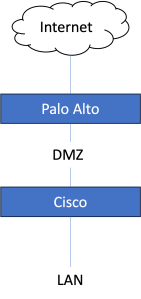
An example of this would be if your business is protected from the internet by a firewall made by Palo Alto. Behind this PA firewall is a DMZ and the DMZ is separated from your internal network by a firewall from Cisco. This layered defense will make it more difficult for attackers to get through the external firewall, DMZ, internal firewall and into the LAN. (See image below for a very simplistic visual)

Downside Of All The Things

All the things may sound great, but unless you are required to meet that level of security there can be a lot of downsides.

First, multiple technologies introduce complexity into an environment. This can make it more difficult to troubleshoot or detect issues (including security events). It can also make it more difficult to operationally support these technologies because they may have different interfaces, APIs, protocols, configurations, etc. It may not be possible to centrally manage these technologies, or it may require the introduction of an additional technology to manage everything.

Second, all of these technologies can increase the number of people required to support them. People time can really add up as a hidden cost and shouldn’t be thrown away lightly. People time starts the second you begin discussing the requirements for a new technology and can include the following:

  • Proof of Concepts (PoCs)
  • Tradeoff & Gap Analysis
  • Requests for Information (RFI)
  • Requests for Proposal (RFP)
  • Requests for Quotes (RFQ)
  • Contract Negotiation
  • Installation
  • Integration
  • Operation & Support

Finally, multiple technologies can cause performance impacts, increased costs and waste. Performance impacts can happen due to differences in technologies, complexity, configuration errors or over consumption of resources (such as agent sprawl). Waste can happen due to overlap and duplicated functionality because not all of the functionality may not get used despite the fact you are paying for it.

Advantages and Disadvantages Of A Single Tool

A single tool that covers the majority, but not all, of your requirements offers one advantage – simplicity. This may not sound like much, but after years of chasing perfection, technology simplicity can have benefits that may not be immediately obvious.

First, seeking out a single tool that meets the majority of requirements will force your security team to optimize their approach for the one that best manages risk while supporting the objectives of the business. Second, a single tool is easier to install, integrate, operate and support. There is also less demand on the rest of the business in terms of procurement, contract negotiation and vendor management. Lastly, a single tool requires less people to manage it and therefore you can run a smaller and more efficient organization.

The biggest disadvantage of a single tool is it doesn’t provide defense in depth. One other disadvantage is it won’t meet all of your security requirements and so the requirements that aren’t met should fall within the risk tolerance of the business or somehow get satisfied with other compensating controls.

A single tool that covers the majority, but not all, of your requirements offers one advantage – simplicity.

Wrapping Up

There are a lot of advantages to meeting all of your requirements with multiple tools, but these advantages come with a tradeoff in terms of complexity, operational overhead, duplicated functionality and increased personnel requirements. If you operate a security program in a highly regulated or highly secure environment you may not have a choice so it is important to be aware of these hidden costs. A single tool reduces complexity, operational overhead and personnel demands, but can leave additional risk unmet and fails to provide defense in depth. Generally, I favor simplicity where possible, but you should always balance the security controls against the risk tolerance and needs of the business.

If Data Is Our Most Valuable Asset, Why Aren’t We Treating It That Way?

There have been several high profile data breaches and ransomware attacks in the news lately and the common theme between all of them has been the disclosure (or threat of disclosure) of customer data. The after effects of a data breach or ransomware attack are far reaching and typically include loss of customer trust, refunds or credits to customer accounts, class action lawsuits, increased cyber insurance premiums, loss of cyber insurance coverage, increased regulatory oversight and fines. The total cost of these after effects far outweigh the cost of implementing proactive security controls like proper business continuity planning, disaster recovery (BCP/DR) and data governance, which begs the question – if data is our most valuable asset, why aren’t we treating it that way?

The Landscape Has Shifted

Over two decades ago, the rise of free consumer cloud services, like the ones provided by Google and Microsoft, ushered in the era of mass data collection in exchange for free services. Fast forward to today, the volume of data growth and the value of that data has skyrocketed as companies have shifted to become digital first or mine that data for advertising purposes and other business insights. The proliferation of AI has also ushered in a new data gold rush as companies strive to train their LLMs on bigger and bigger data sets. While the value of data has increased for companies, it has also become a lucrative attack vector for threat actors in the form of data breaches or ransomware attacks.

The biggest problem with business models that monetize data is: security controls and data governance haven’t kept pace with the value of the data. If your company has been around for more than a few years chances are you have a lot of data, but data governance and data security has been an afterthought. The biggest problem with bolting on security controls and data governance after the fact is it is hard to reign in pandoras box. This is also compounded by the fact that it is hard to put a quantitative value on data, and re-architecting data flows is seen as a sunk cost to the business. The rest of the business may find it difficult to understand the need to rearchitect their entire business IT operations since there isn’t an immediate and tangible business benefit.

Finally, increased global regulation is changing how data can be collected and governed. Data collection is shifting from requiring consumers to opt-out to requiring them to explicitly opt-in. This means consumers and users (an their associated data) will no longer be the presumptive product of these free services without their explicit consent. Typically, increased regulation also comes with specific requirements for data security, data governance and even data sovereignty. Companies that don’t have robust data security and data governance are already behind the curve.

False Sense Of Security

In addition to increased regulation and a shifting business landscape, the technology for protecting data really hasn’t changed in the past three decades. However, few companies implement effective security controls on their data (as we continue to see in data breach notifications and ransomware attacks). A common technology used to protect data is encryption at rest and encryption in transit (TLS), but these technologies are insufficient to protect data from anything except physical theft and network snooping (MITM). Both provide a false sense of security related to data protection.

Furthermore, common regulatory compliance audits don’t sufficiently specify protection of data throughout the data lifecycle beyond encryption at rest, encryption in transit and access controls. Passing these compliance audits can give a company a false sense of security that they are sufficiently protecting their data, when the opposite is true.

Just because you passed your compliance audit, doesn’t mean you are good to go from a data security and governance perspective.

Embrace Best Practices

Businesses can get ahead of this problem to make data breaches and ransomware attacks a non-event by implementing effective data security controls and data governance, including BCP/DR. Here are some of my recommendations for protecting your most valuable asset:

Stop Storing and Working On Plain Text Data

Sounds simple, but this will require significant changes to business processes and technology. The premise is the second data hits your control it should be encrypted and never, ever, unencrypted. This means data will be protected even if an attacker accesses the data store, but it also will mean the business will need to figure out how to modify their operations to work on encrypted data. Recent technologies such as homomorphic encryption have been introduced to solve these challenges, but even simpler activities like tokenizing the data can be an effective solution. Businesses can go one step further and create a unique cryptographic key for every “unique” customer. This would allow for simpler data governance, such as deletion of data.

Be Ruthless With Data Governance

Storage is cheap and it is easy to collect data. As a result companies are becoming digital data hoarders. However, to truly protect your business you need to ruthlessly govern your data. Data governance policies need to be established and technically implemented before any production data touches the business. These policies need to be reviewed regularly and data should be purged the second it is no longer needed. A comprehensive data inventory should be a fundamental part of your security and privacy program so you know where the data is, who owns it and where the data is in the data lifecycle.

The biggest problem with business models that monetize data is: security controls and data governance haven’t kept pace with the value of the data.

Ruthlessly governing data can have a number of benefits to the business. First, it will help control data storage costs. Second, it will minimize the impact of a data breach or ransomware attack to the explicit time period you have kept data. Lastly, it can protect the business from liability and lawsuits by demonstrating the data is properly protected, governed and/or deleted. (You can’t disclose what doesn’t exist).

Implement An Effective BCP/DR and BIA Program

Conducting a proper Business Impact Analysis (BIA) of your data should be table stakes for every business. Your BIA should include what data you have, where it is and most importantly, what would happen if this data wasn’t available? Building on top of the BIA should be a comprehensive BCP/DR plan that appropriately tiers and backs up data to support your uptime objectives. However, it seems like companies are still relying on untested BCP/DR plans or worse solely relying on single cloud regions for data availability.

Every BCP/DR plan should include a write once, read many (WORM) backup of critical data that is encrypted at the object or data layer. Create WORM backups to support your RTO and RPO and manage the backups according to your data governance plan. Having a WORM backup will prevent ransomware attacks from being able to encrypt the data and if there is a data breach it will be meaningless because the data is encrypted. BCP / DR plans should be regularly tested (up to full business failover) and security teams need to be involved in the creation of BCP/DR plans to make sure the data will have the confidentiality, integrity and availability when needed.

Don’t Rely On Regulatory Compliance Activities As Your Sole Benchmark

My last recommendation for any business is – just because you passed your compliance audit, doesn’t mean you are good to go from a data security and governance perspective. Compliance audits exist as standards for specific industries to establish a minimum bar for security. Compliance standards can be watered down due to industry feedback, lobbying or legal challenges and a well designed security program should be more comprehensive than any compliance audit. Furthermore, compliance audits are typically tailored to specific products and services, have specific scopes and limited time frames. If you design your security program to properly manage the risks to the business, including data security and data governance, you should have no issues passing a compliance audit that assesses these aspects.

Wrapping Up

Every business needs to have proper data security and data governance as part of a comprehensive security program. Data should never be stored in plain text and it should be ruthlessly governed so it is deleted the second it is no longer needed. BCP/DR plans should be regularly tested to simulate data loss, ransomware attacks or other impacts to data and, while compliance audits are necessary, they should not be the sole benchmark for how you measure the effectiveness of your security program. Proper data protection and governance will make ransomware and data breaches a thing of the past, but this will only happen if businesses stop treating data as a commodity and start treating it as their most valuable asset.