Security Theater Is The Worst

We have all been there…we’ve had moments in our life where we have had to “comply” or “just do it” to meet a security requirement that doesn’t make sense. We see this throughout our lives when we travel, in our communities and in our every day jobs. While some people may think security theater has merit because it “checks a box” or provides a deterrent, in my opinion security theater does more harm than good and should be eradicated from security programs.

What Is Security Theater?

Security theater was first coined by Bruce Schneier and refers to the practice of implementing security measures in the form of people, processes or technologies that give the illusion of improved security. In practical terms, this means there is something happening, but what that something is and how it actually provides any protection is questionable at best.

Examples Of Security Theater

Real life examples of security theater can be seen all over the place, particularly when we travel. The biggest travel security theater is related to liquids. TSA has a requirement that you can’t bring liquids through security unless they are 3 ounces or smaller. However, you can bring a bottle of water through if it is fully frozen…what? Why does being frozen matter? What happens if I bring 100, 3 ounce shampoo bottles through security? I still end up with the same volume of liquid and security has done nothing to prevent me from bringing the liquid through. As for water, the only thing that makes sense for why they haven’t relaxed this requirements is to prop up the businesses in the terminal that want to sell overpriced bottles of water to passengers. Complete theater.

“Security theater is the practice of implementing security measures that give the illusion of improved security.”

Corporate security programs also have examples of security theater. This can come up if you have an auditor that is evaluating your security program against an audit requirement and they don’t understand the purpose of the requirement. For example, and auditor may insist you install antivirus on your systems to prevent viruses and malware, when your business model is to provide Software as a Service (SaaS). With SaaS your users are consuming software in a way that nothing is installed on their end user workstations and so there is little to no risk of malware spreading from your SaaS product to their workstations. Complete theater.

Another example of security theater is asking for attestation a team is meeting a security requirement instead of designing a process or security control that actually achieves the desired outcome. In this example, the attestation is nothing more than a facade designed to pass accountability from the security team, that should be designing and implementing effective controls, to the business team. It is masking ineffective process and technologies. Complete theater.

Lastly, a classic example of security theater is security by obscurity. Otherwise known as hiding in plain sight. If your security program is relying on the hope that attackers won’t find something in your environment then prepare to be disappointed. Reconnaissance tools are highly effective and with enough time threat actors will find anything you are trying to hide. Hope is not a strategy. Complete theater.

What Is The Impact Of Security Theater?

Tangible And Intangible Costs

Everything we do in life has a cost and this is certainly true with security theater. In the examples above there is a real cost in terms of time and money. People who travel are advised to get to the airport at least two hours early. This cost results in lost productivity, lost time with family and decreased self care.

In addition to tangible costs like those above, there are also intangible costs. If people don’t understand the “why” for your security control, they won’t be philosophically aligned to support it. The end result is security theater will erode confidence and trust in your organization, which will undermine your authority. This is never a place you want to be as a CISO.

Some people may argue that security theater is a deterrent because the show of doing “security things” will deter bad people from doing bad things. This sounds more like a hope than reality. People are smart. They understand when things make sense and if you are implementing controls that don’t make sense they will find ways around them or worse, ignore you when something important comes up.

With any effective security program the cost of a security control should never outweigh the cost of the risk, but security theater does exactly that.

Real Risks

The biggest problem with security theater is it can give a false sense of security to the organization that implements it. The mere act of doing “all the things” can make the security team think they are mitigating a risk when in reality they are creating the perfect scenario for a false negative.

How To Avoid Security Theater?

The easiest way to avoid security theater is to have security controls that are grounded in sound requirements and establish metrics to evaluate their effectiveness. Part of your evaluation should evaluate the cost of the control versus the cost of the risk. If your control costs more than the risk then it doesn’t make sense and you shouldn’t do it.

The other way to avoid security theater is to exercise integrity. Don’t just “check the box” and don’t ask the business you support to check the box either. Take the time to understand requirements from laws, regulations and auditors to determine what the real risk is. Figure out what an effective control will be to manage that risk and document your reasoning and decision.

The biggest way to avoid security theater is to explain the “why” behind a particular security control. If you can’t link it back to a risk or business objective and explain it in a way people will understand then it is security theater.

Can we stop with all the theater?

What’s The Relationship Between Security Governance and Organizational Maturity?

Organizational and security governance is touted as a key component of any successful security program. However, I’ve been thinking about governance lately and how it relates to the overall maturity of an organization. This has prompted some questions such as: what happens if you have too much governance? and What’s the relationship between security governance and organizational maturity?

What Is Governance?

First, let’s talk about what governance is.

Governance is the process by which an organization defines, implements and controls the business.

Let’s unpack what this means for a security organization. The process of defining security for the business is done through policies, standards and guidelines. Security policies are requirements the business must meet based on laws, regulations or best practices adopted by the business. These policies align to business objectives. Implementation is done through security controls that are put in place to meet a specific policy or to manage a risk. Lastly, controlling the business is done via audits and compliance checks. The security org follows up on how well the business is following policies, implementing controls and managing risk. Control can also include enforcement, which can involve gating processes, such as requiring approval for business critical and high risk activities, or recommending additional security requirements for the business to manage a risk.

Why Do We Need Governance At All?

In an ideal world we wouldn’t. Imagine a business that is created entirely of clones of yourself. There would be implicit and explicit trust between you and your other selves to do what is best for the business. Communication would be simple and you would already be aligned. In this case you don’t need a lot (or any) governance because you can trust yourself to do the things. However, unless you are Michael Keaton in Multiplicity, this just isn’t a reality.

Governance achieves a few things for a business. First, it communicates what is required of its employees and aligns those employees to common objectives. Second, it helps employees prioritize activities. None of this would be needed if human’s weren’t so complex with diverse backgrounds, experiences, perspectives, education, etc. In an ideal world we wouldn’t need any governance at all. The reality is, we do need governance, but it needs to be balanced so it doesn’t unnecessarily impede the business.

How Does This Relate To Organizational Maturity?

Organizational maturity refers to how your employees are able to execute their tasks to achieve the objectives of the business. This relates to things like the quality of code, how quickly teams resolve operational issues or how efficiently they perform a series of tasks. It can be loosely thought of as efficiency, but I actually think it combines efficiency with professionalism and integrity. Maturity is knowing what good is and being able to execute efficiently to get there. There is a fantastic book about this topic called Accelerate: The Science of Lean Software and DevOps: Building High Performing Technology Organizations by Nicole Forsgren PhD.

Which brings us to the relationship of governance and maturity…

There is an inverse relationship between organizational maturity and organizational governance. In simple terms:

The less mature an organization, the more governance is needed.

For example, if your organization struggles to apply patches in a timely manner, continually introduces new code vulnerabilities into production or repeatedly demonstrates behavior that places the business at risk, then your organizational maturity is low. When organizational maturity is low, the business needs to put processes and controls in place to align employees and direct behavior to achieve the desired outcomes. In the examples above, increased governance is an attempt to manage risk because your employees are behaving in a way that lacks maturity and is placing the business at risk.

What causes low organizational maturity?

Organizational maturity is a reflection of employee behavior, skillset, knowledge, education and alignment. In other words, organizational maturity is a reflection of your organizational culture. In practical terms your employees may simply not know how to do something. They may not have experience with working for your type of business or in the industry you operate in. Perhaps they had a really bad boss at a past job and learned bad behavior. Whatever the reason, low organizational maturity is linked to lots of sub-optimal outcomes in business.

How To Improve Organizational Maturity?

If governance and maturity are inversely linked, the question becomes how can we increase organizational maturity so we need less governance? There are a lot of ways to increase organizational maturity. One that is fairly obvious is to start with a mature organization and maintain it over time. However, this is easier said than done and is why some organizations are fanatical about culture. This relates to everything from hiring to talent management and requires strong leadership at all levels of the company.

Other ways to improve organizational maturity are through training and education. This is why security awareness and training programs are so critical to a successful security program. Security awareness and training programs are literally attempting to improve organizational maturity through education.

One last way to improve maturity is via process. The security organization can establish a new process that all teams must follow. As teams go through this process you can educate them and reward teams that exhibit the ideal behavior by relaxing the process for them. You can also help teams educate themselves by publishing the requirements and making the process transparent. The challenge with imposing a new process is having the discipline to modify or remove the process when needed, which comes back to governance.

What’s the right level of governance?

The optimal level of governance is going to be based on your organizational maturity and desired business outcomes. In order to determine if you have too much or too little governance you need to measure organizational maturity and the effectiveness of existing organizational governance. There are industry standard processes for measuring organizational maturity, like the Capability Maturity Model Integration (CMMI) and Six Sigma, or you can create your own metrics. Some ways to measure governance effectiveness are:

  • Ask For Feedback On Security Processes – Are the processes effective? Do teams view them as an impediment or are they viewed favorably? Are the processes easy to navigate and objective or are they opaque and subjective?
  • Measure Effectiveness Of Security Controls – Are your security controls effective? If you ask a team to do work to implement a security control you should have clear metrics that determine if that control is effective. If you implement a control, but that control hasn’t changed the outcome, then the control is ineffective. This can indicate your governance is ineffective or your organizational maturity needs to improve.
  • Assess and Update Policy – Security policies should be living documents. They shouldn’t be set in stone. Security policies need to map back to laws and regulations they support and the business requirements needed to be successful. Laws, regulations and business requirements all change over time and so should your security policies. By having up to date and relevant security policies you can ensure your organizational governance matches the maturity of the business.

What Are Typical Scenarios For Governance And Maturity?

There are four scenarios related to governance and maturity:

A mature organization with too much governance – your organization is mature, but you are overly controlling with process and requirements. The net effect will be to slow down and impede the business unnecessarily. You are effectively lowering the organizational maturity due to too much governance.

An immature organization with too little governance – this is a recipe for disaster. If your organization is immature and you fail to govern the organization you will open the business up to unnecessary risk. You will get out maneuvered by your competitors, you will miss opportunities, you will fail to comply with laws and regulations and generally will have a lot of activity without any result. Your employees will lack coordination and as a result your business will suffer.

A mature organization with too little governance – This isn’t a bad scenario to be in. A mature organization implies they are doing the right things and don’t need a lot of guidance. A laissez faire attitude may be the right thing to allow employees flexibility and freedom, but it does come with inherent risk of not being compliant with laws and regulations. It may also mean there is duplication of effort or multiple ways of doing things, which could be optimized.

Governance and maturity are balanced – obviously this is the ideal scenario where your organizational governance is balanced to the level of maturity of the organization. Easy to think about in practice, difficult to achieve in reality.

Wrapping Up

Organizational governance and maturity are inversely related and need to be balanced in order for the business to operate effectively. There are ways to measure organizational maturity and governance effectiveness and by having a continual feedback loop you can optimally align both for success.

Are Traditional IT Roles Still Relevant In Today’s Modern Security Org?

As more and more businesses shift to the cloud and micro-services, the scope of responsibility for security and operations gets pushed up the stack. As a result of this scope compression, teams no longer need to worry about maintaining physical infrastructure like deploying servers, provisioning storage systems or managing network devices. As this scope falls off, the question becomes – are traditional IT roles still relevant in today’s modern security org?

Cloud Service Models

First, let’s talk about cloud service models most companies will consume because this is going to determine what roles you will need within your security organization. This post is also assuming you are not working at a hyper-scale cloud organization like AWS, Azure, Google Cloud or Oracle because those companies still deploy hardware as part of the services they consume internally and provide to their customers.

Infrastructure as a Service (IaaS)

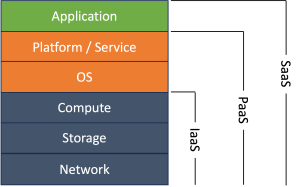
Infrastructure as a Service (IaaS) is what you typically think of when you consume resources from a Cloud Service Provider (CSP). In IaaS, the CSP provides and manages the underlying infrastructure of network, storage and compute. The customer is responsible for managing how they consume these resources and any application that are built on top of the underlying IaaS.

Platform as a Service (PaaS)

In Platform as a Service (PaaS), the cloud service provider manages the underlying infrastructure and provides a platform for customers to develop applications. All the customer needs to do is write and deploy an application onto the platform.

Software as a Service (SaaS)

With Software as a Service (SaaS) customers consume software provided by the cloud service provider. All the customer needs to worry about is bringing their own data or figuring out how to apply the SaaS to their business.

IaaS, PaaS & SaaS Cloud Service Provider Logical Model

As you can see from the above model, organizations that adopt cloud services will only have to manage security at certain layers in the stack (there is some nuance to this, but let’s keep it simple for now).

What Are Some Traditional IT Roles?

There are a variety of traditional information technology (IT) roles that will exist when an organization manages their own hardware, network connections and data centers. Some or all of these roles will no longer apply as companies shift to the cloud. Here is a short list of those roles:

  • Hardware Engineer – Server and hardware selection, provisioning, maintenance and management (racking and stacking)
  • Data Center Engineer – Experience designing and managing data centers and physical facilities (heating, cooling, cabling, power)
  • Virtualization Administrator – Experience with hypervisors and virtualization technologies*
  • Storage Engineer – Experience designing, deploying and provisioning physical storage
  • Network Engineer – Experience with a variety of network technologies at OSI layer 2 and layer 3 such as BGP, OSPF, routing and switching

*May still be needed if organizations choose to deploy virtualization technologies on top of IaaS

Who Performs Traditional IT Roles In The Cloud?

Why don’t organizations need these traditional IT roles anymore? This is because of the shared service model that exists in the cloud. As a customer of a cloud service provider you are paying that CSP to make it easy for you to consume these resources. As a result you don’t have to worry about the capital expenditure of purchasing hardware or the financial accounting jujitsu needed to amortize or depreciate those assets.

In a shared service model the CSP is responsible for maintaining everything in the stack for the model you are consuming. For example, in the IaaS model, the CSP will provide you with the network, storage and compute resources you have requested. Behind the scenes they will make sure all these things are up to date, patched, properly cooled, properly powered, accessible and reliable. As a CSP IaaS customer, you are responsible for maintaining anything you deploy into the cloud. This means you need to maintain and update the OS, platform, services and applications that you install or create on top of IaaS as part of your business model.

Everything Is Code

One advantage of moving to the cloud is everything becomes “code”. In an IaaS model this means requesting storage, networking, compute, deploying the OS and building your application are all code. The end result of everything is code means you no longer need dedicated roles to provision or configure the underlying IaaS. Now, single teams of developers can provision infrastructure and deploy applications on demand. This skillset shift resulted in an organizational shift that spawned the terms developer operations (DevOps) and continuous integration / continuous delivery (CI/CD). Now you have whole teams deploying and operating in a continuous model.

Shift From Dedicated Roles To Breadth Of Skills

Ok, but don’t we still need traditional IT skills in security? Yes, yes you do. You need the skills, but not a dedicated role.

Imagine a model where everyone at your company works remotely from home and your business model is cloud native, using PaaS to deploy your custom application. As the CISO of this organization, what roles do you need in your security team?

From a business standpoint, you still need to worry about data and how it flows, you need to worry about how your applications are used and can be abused, but your team will primarily be focused on making sure the code your business uses to deploy resources and applications in the cloud is secure. You also need to make sure your business is following appropriate laws and regulations. However, you will no longer need dedicated people managing firewalls, routers or hardening servers.

What you will need is people with an understanding of technologies like identity, networking, storage and operating systems. These skills will be necessary so your security team can validate resources are being consumed securely. You will also need a lot of people who understand application security and you will need compliance folks to make sure the services you are consuming are following best practices (like SOC 2 and SOC 3 reports).

What Do You Recommend For People Who Want To Get Into Security Or Are Deciding On A Career Path?

I want to wrap up this post by talking about skills I think people need to get into security. Security is a wonderful field because there are so many different specialization areas. Anyone with enough time and motivation can learn about the different areas of security. In fact, the U.S. Government is kind enough to publish a ton of frameworks and documents talking about all aspects of security if you have the time and motivation to read them. That being said, if I was just starting out in security I would advise people to first pick something that interests them.

  • Are you motivated by building things? Learn how to be a security engineer or application security engineer. Learn how to script, write code and be familiar with a variety of technologies.
  • Are you motivated by breaking things? Learn how to be a penetration tester, threat hunter or offensive security engineer.
  • Do you like legal topics, regulations and following the rules? Look into becoming an auditor or compliance specialist.
  • Do you like detective work, investigating problems and periodic excitement? Learn how to be an incident response or security operations analyst.

Ask Questions For Understanding

The above questions and recommendations are just the tip of the iceberg for security. My biggest piece of advice is once you find an area that interests you start asking a lot of questions. Don’t take it for granted that your CSP magically provides you with whatever resources you ask for. Figure out how that works. Don’t blindly accept a new regulation. Dissect it and understand the motivation behind it. Don’t blindly follow an incident response playbook. Understand why the steps exist and make suggestions to improve it. If a new vulnerability is released that impacts your product, understand how and why it is vulnerable. The point is, as a security professional the more understanding you have of why things exist, how they work and what options you have for managing them, the more skills you will add to your resume and the more successful you will be in your career, especially as your security org collapses roles as a result of moving to the cloud.

The Dichotomy Of Security

If you have ever read Extreme Ownership or The Dichotomy of Leadership by Jocko Willink, then you will be familiar with the concept of dichotomy and how opposing forces of a skill set can compliment each other. Mastering both sides can allow flexibility and increase the effectiveness of that skill set when dynamically applied to a given situation. This is true in the security space, where fundamental opposing forces need to be balanced in order to manage risk and achieve success. Let’s take a look at a few examples.

Security Extremes

The easiest example of the dichotomy of security is to look at the extremes. Security professionals jokingly say the most secure company is one that is not connected to the internet. While this may be true, it will also prevent the company from conducting business effectively and so the company will cease to exist and security will no longer be needed.

On the other end of the spectrum there is the extreme of a business that has zero security and so there are no impediments to conducting business. While this may sound great to some, the reality is the company will be unable to effectively conduct business because of the real threats that exist on the internet. In the situation the company will also cease to exist because they will be hacked into oblivion.

It is obvious there is a dichotomy between no security and no connectivity and these forces need to be appropriately balanced for a security program to be effective, while allowing the business to operate.

Manual vs Automated Security

Another example of dichotomy is between manual security tasks and automation. While every CISO I know is striving to increase automation of security tasks, the reality is humans are still going to be needed in any security program for the foreseeable future.

Manual tasks are ideal for situations where humans need to demonstrate creativity, intuition or make complex decisions based on subtle context. Security functions like penetration testing, threat hunting, red teaming and offensive security require high amounts of skill and experience that automation, like AI, hasn’t been able to replicate. Additionally, soft skills such as reporting to the board, shifting culture, building alliances and making prioritization decisions are all extremely complex and unlikely candidates for automation. However, while manual activities benefit activities that require a high degree of creativity, they are inherently slow and can impede the normal flow of business.

Recently, the advances in automation and artificial intelligence have exponentially increased their usefulness. Automation is extremely useful for offloading repeatable tasks that lend themselves to being programmatically defined. For example, attack simulation products have made huge strides in offloading repetitive tasks of reconnaissance, enumeration, vulnerability assessment and remedial exploitation. We are seeing additional advances in automation related to incident response where events can be correlated and specific activities in an IR playbook can be completed to offload analysts and help focus their attention. AI has also helped to offload lower level operational activities like call centers and help desk inquiries.

While automation may accelerate parts of the business and offload humans from repeatable tasks, it does introduce complexity, which can be difficult to troubleshoot or can cause outright failures. Automation is also rigid because it is only as good as the parameters of the process it is following. This means it can’t think outside of the box or demonstrate creativity. There is also the risk of introducing bias into your processes if your underlying model is flawed.

As you can see manual security processes and automated security processes are opposing forces that need to be balanced based on the skill of your security team and the needs of the business.

The Human Problem

The last dichotomy I want to discuss is the human problem in security. Humans are necessary because of their creativity, diversity and capacity for adapting to an infinite number of situations. However, the flexibility in human nature also presents one of the fundamental security problems – how to you protect against human nature?

The reality is humans are flawed, but in a good way. Threat actors can try to take advantage of these flaws, whether they are logical (like firewall rules) or physical (like human psychology). Humans are essential to every aspect of a business and so we have to figure out how to protect them. The most difficult balance in security is developing a program that is comprehensive enough to protect against human nature without stifling it.

The Security Ideal

The ideal security program will recognize the dichotomy of the security challenges it faces and balance them accordingly. The ideal security program balances security with flexibility. We are seeing this balance manifest in mature security programs via concepts like security guard rails and the paved path. The paved path and guard rails attempt to allow a certain amount of latitude for acceptable behavior, while being rigid enough to protect users and the business accordingly.

Application In Other Domains

The concept of dichotomy is universal across any domain. In fact, this is an area of extensive research in disciplines like mathematics, computer science, military strategy, and economics. Specifically, in the space of network and graph theory there is a concept call max flow, min cut. These are counter principles that are opposite, yet complimentary. If you think of any network (road, supply chain, computer network, etc.) the point of maximum flow across that network is also the point where maximum disruption (minimum cut) can occur. From a military or security stand point you will want to protect the max flow/min cut, but from an attacker stand point, the max flow / min cut, is the area that will require the least amount of effort for maximum damage. Pretty neat!

Wrapping Up

An effective security program will balance the needs of security with the needs business with the ultimate goal of effectively managing risk. A critical skill for any security practitioner is to be flexible and adaptive. Specifically, by recognizing that security issues have two sides to them, security practitioners can demonstrate empathy towards the business and find an appropriate balance that can protect without impeding the business.